




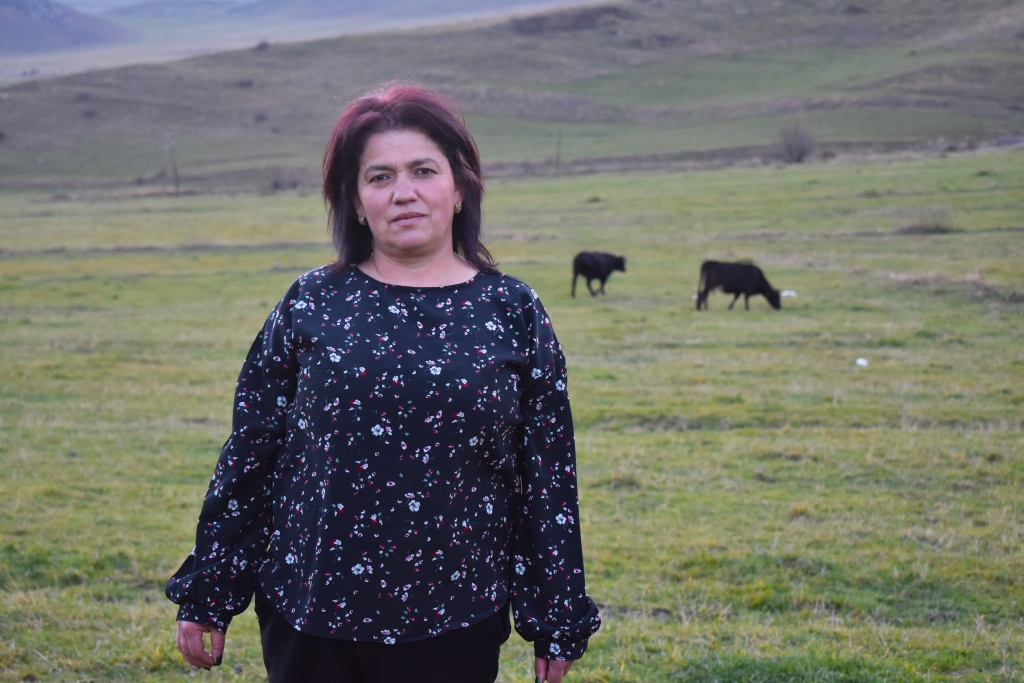


Marine Zadayan / Farmer, Educator / Verishen, Goris
How I Became a MAVETA Partner
For more than 35 years, livestock farming has been an inseparable part of my life. I grew up in a rural community where hard work and care for animals were a natural way of life. Over time, I established and steadily expanded my farm – building a new barn, improving infrastructure, and increasing livestock numbers. Today, my farm includes 12 small ruminants and 30 head of cattle.
Alongside farming, I have dedicated 25 years to education and currently serve as Deputy Principal for Student Affairs at our local school. It was this combination of practical agricultural experience and pedagogical leadership that led me to embrace dual education.
During a Career Day visit, organized within the MAVETA project, I accompanied my students to “The Ranch,” where I was first introduced to the DUAL education. The experience was transformative. I realized that my farm could serve not only as a productive agricultural enterprise, but also as a structured learning environment for young people.
This marked the beginning of my journey as an employer within the DUAL education, welcoming apprentices to train on my farm.
The outcome speaks for itself
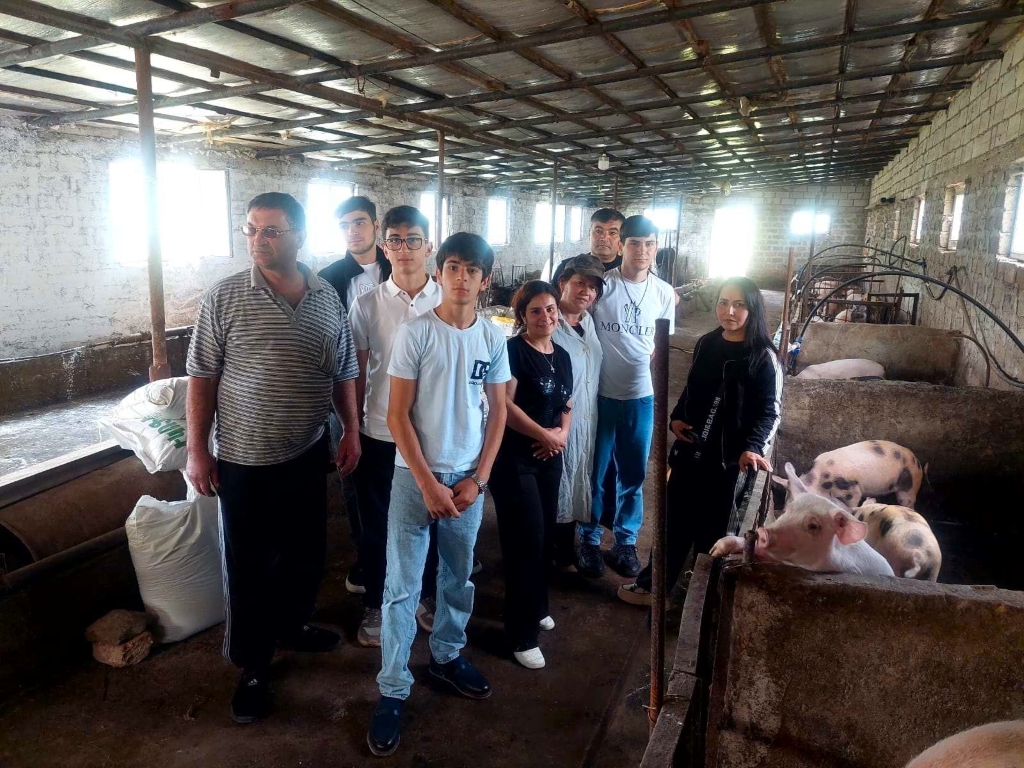
To date, I have hosted 16 apprentices. On our farm, they translate classroom knowledge into hands-on experience within a real production setting. Beyond technical competencies, they develop: 1. a strong sense of responsibility and discipline; 2. teamwork and communication skills; 3. practical experience in farm management; 4. end-to-end knowledge of animal care and milk production processes.
Within the MAVETA project, we received technical assistance for modernizing farming operations and enhancing our production capacity, thereby expanded our ability to host and properly train apprentices. Our farm has become a well-equipped, dynamic learning environment, where apprentices are welcomed as family members. My husband also mentors students specializing in agricultural mechanization.
Dual education is reshaping young people’s perceptions of rural life. They come to understand that agriculture is not merely physical labor; it is a knowledge-intensive sector requiring planning, management, and innovation. They begin to see that it is possible to build a sustainable livelihood, create value, and achieve professional fulfillment in the village.
The training courses delivered under the MAVETA project have also contributed significantly to my own professional development. They enabled me to update my knowledge, expand my perspective, and strengthen my capacity to mentor the next generation.
The outcome is clear: a young person equipped with both education and practical experience is more confident, better prepared for the labor market, and capable of generating tangible value for the community.
Why Other Private-Sector Representatives Should Engage in Dual Education
Dual education offers clear advantages not only for students, but also for employers:
- Access to motivated young professionals trained within your own production environment and aligned with your workplace standards.
- The opportunity to contribute directly to the development of a qualified workforce and ensure the long-term sustainability of the sector.
- A meaningful role in strengthening rural communities by creating pathways for young people to remain and thrive locally.
I encourage fellow employers to join this initiative and host apprentices – not merely as a formal obligation, but with genuine commitment and purpose.
If we aspire to advance agriculture, we must be prepared to invest in people and share our experience.
I have always said, “When hardship comes, it is the cow that sustains the household.” Today, I would add: the future of agriculture rests in the hands of educated, practically trained young professionals.
Dual education is the bridge that connects knowledge with practice, experience with results, and generations with opportunity.
Love has given me the strength to build. Dual education gives me the opportunity to pass that strength forward – on to the next generation.
The MAVETA project is funded by a broad coalition of international and local organizations led by the Swiss Agency for Development and Cooperation (SDC), including the Austrian Development Agency, the German Ministry for Economic Cooperation and Development (BMZ), the Government of Armenia, the Swiss Church Aid (HEKS/EPER) NGO, Izmirlian Foundation, the Strategic Development Agency (SDA) NGO and Vanand Agro CJSC.
The project’s implementing partners are the GIZ and HEKS/EPER with the involvement of SDA and the School of Agricultural, Forest and Food Sciences at the Bern University of Applied Sciences (HAFL).