





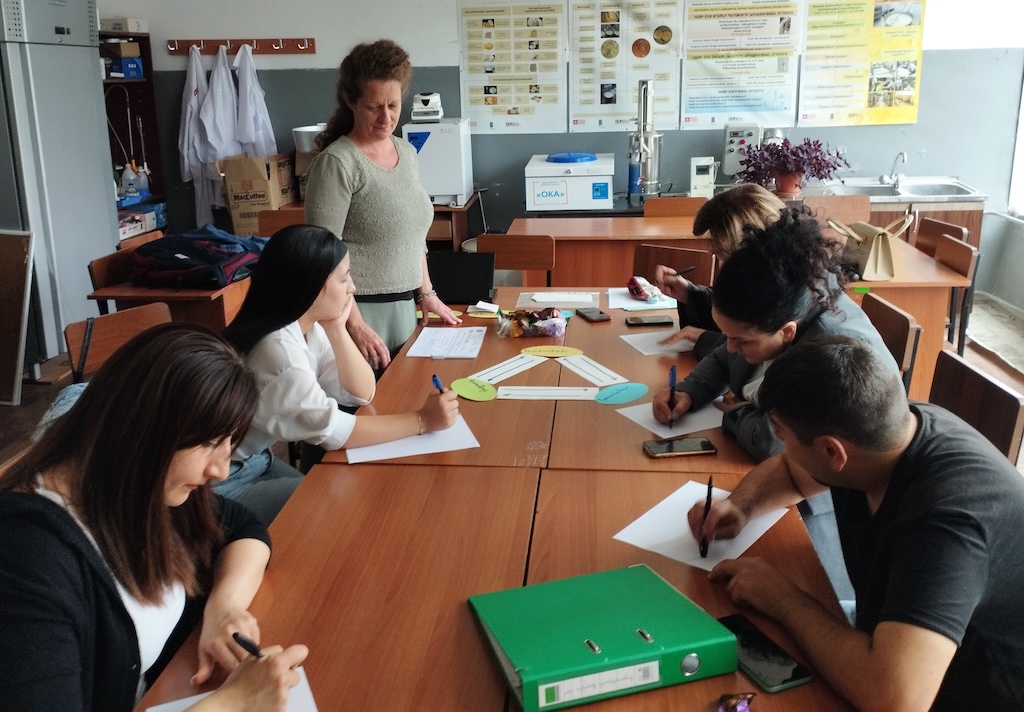
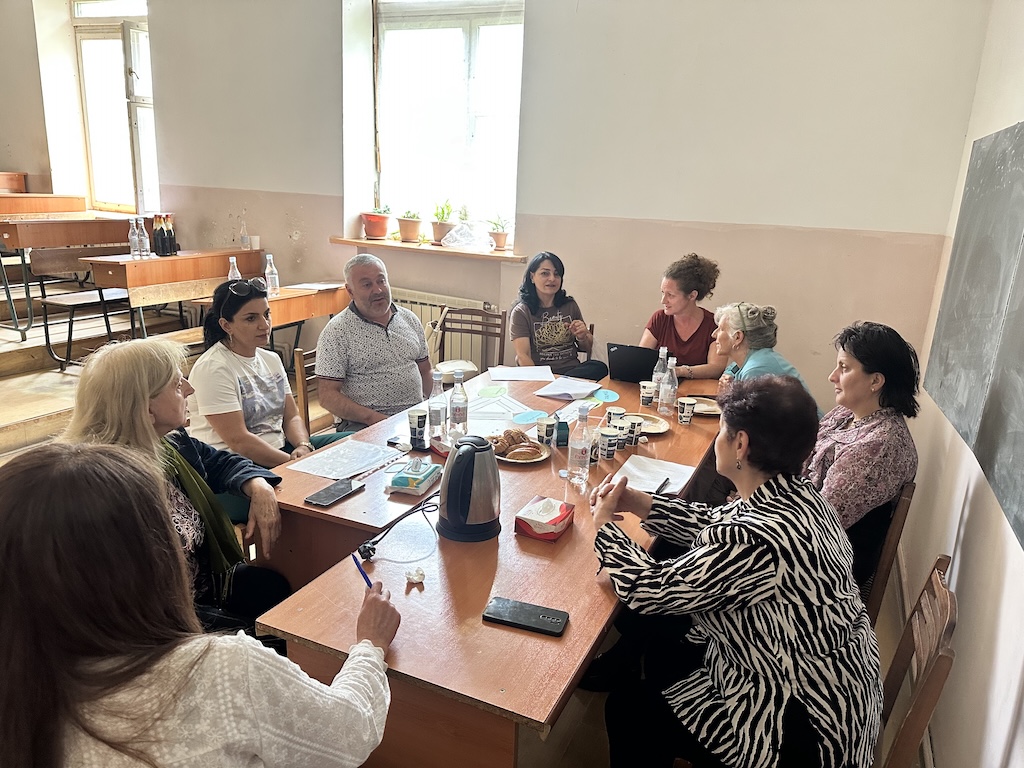
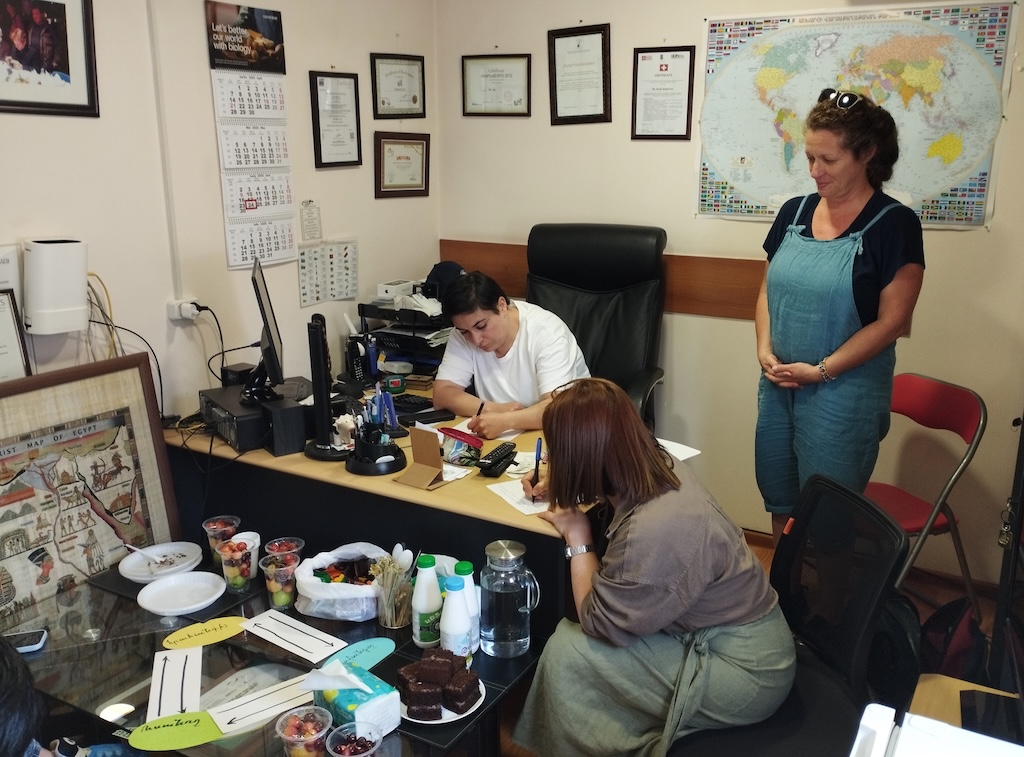


Within the framework of the “Modernizing Vocational Education and Training in Agriculture in Armenia” (MAVETA) project, a consultation was held from June 30 to July 4 in the Lori and Syunik regions, focusing on the assessment of the completion of dual learning documentation in the profession of milk and dairy technology.
Astrid Schmidt, an agricultural consultant at the Bern University of Applied Sciences (HAFL) led the monitoring and consulation sessions.
During the consultation, teachers and apprentices from the Stepanavan and Goris State Agricultural Colleges, the Sisian branch of ANAU, and representatives of the project partner from private sector discussed the specific requirements for properly completing the necessary documentation in the context of organizing dual education, with particular emphasis on the importance of trilateral communication between the teacher, apprentice, and instructor during practical training sessions.
The participants visited milk processing factoties operated by project partners: “Viva Kat” (Lori region), “Sis-Alp,” and “Elola” (Syunik region). At these facilities, the participants reviewed the practical steps required to achieve the learning outcomes of instructor-apprentice training modules and examined the principles for properly completing learning documentation.
The MAVETA project is funded by a broad coalition of international and local organizations led by the Swiss Agency for Development and Cooperation (SDC), including the Austrian Development Agency, the German Ministry for Economic Cooperation and Development (BMZ), the Government of Armenia, the Swiss Church Aid (HEKS/EPER) NGO, Izmirlian Foundation, the Strategic Development Agency (SDA) NGO and Vanand Agro CJSC.
The project’s implementing partners are the GIZ and HEKS/EPER with the involvement of SDA and the School of Agricultural, Forest and Food Sciences at the Bern University of Applied Sciences (HAFL).