




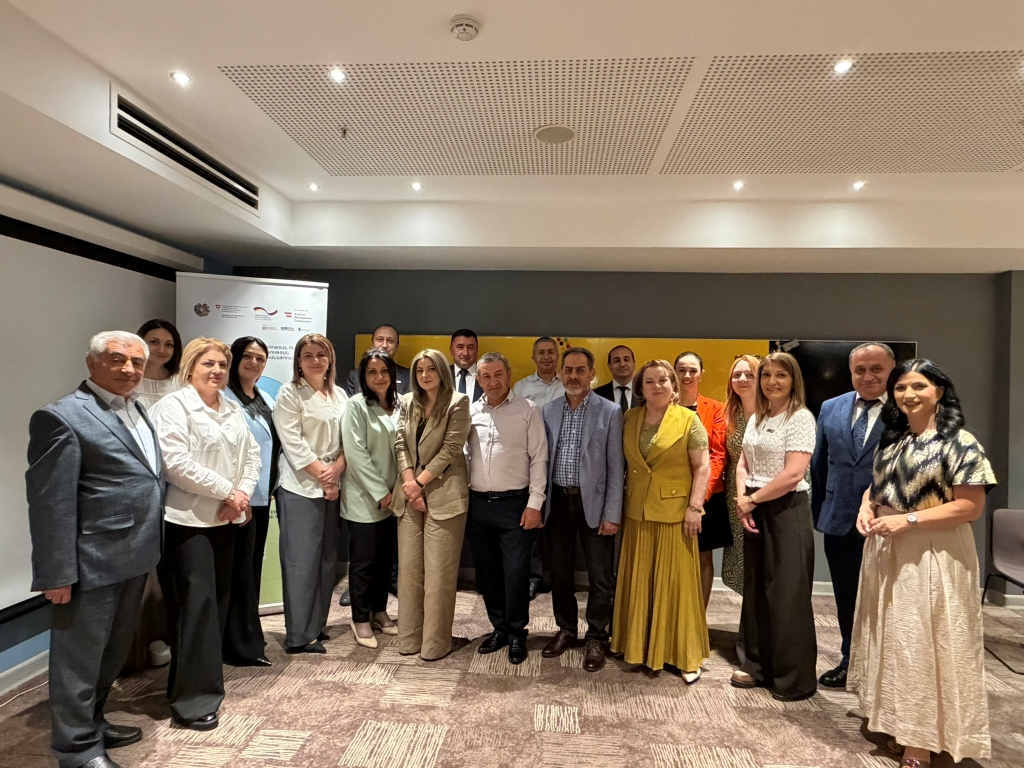
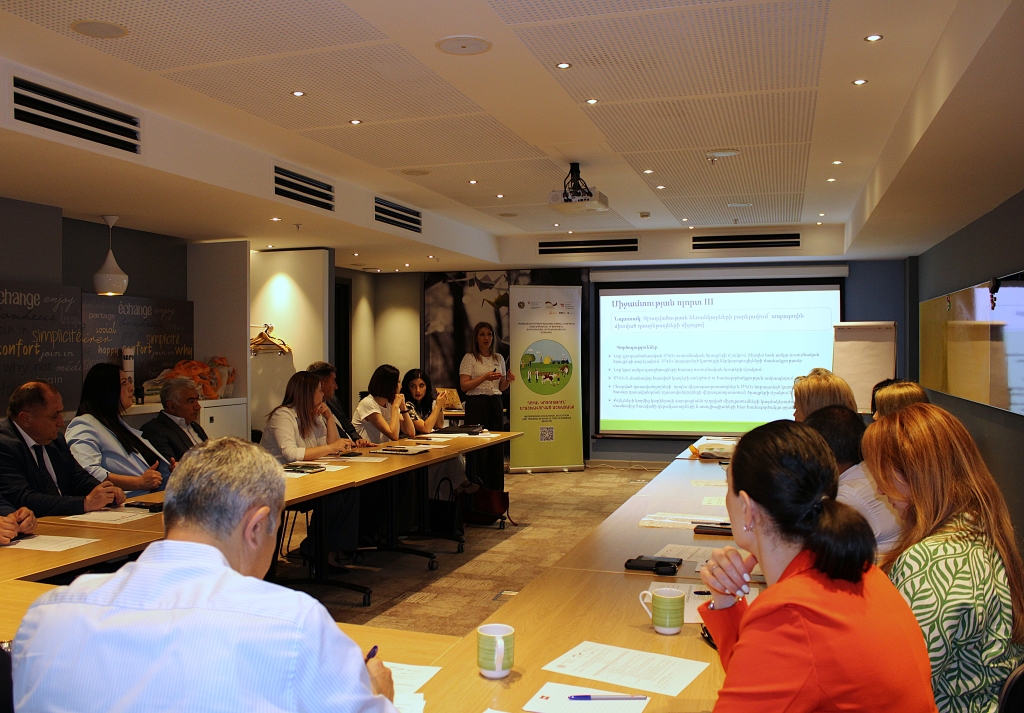
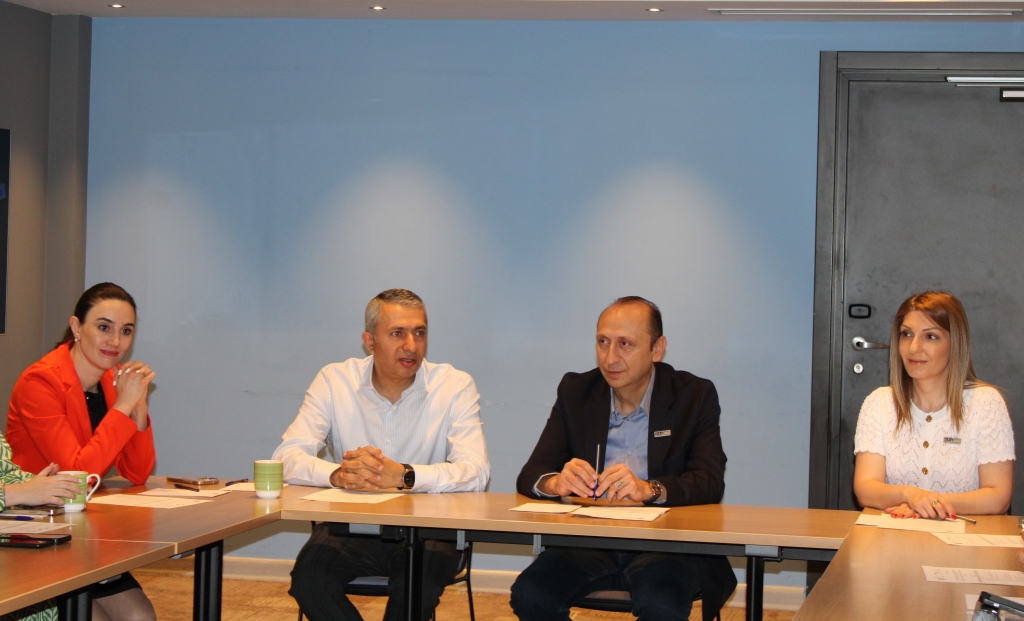
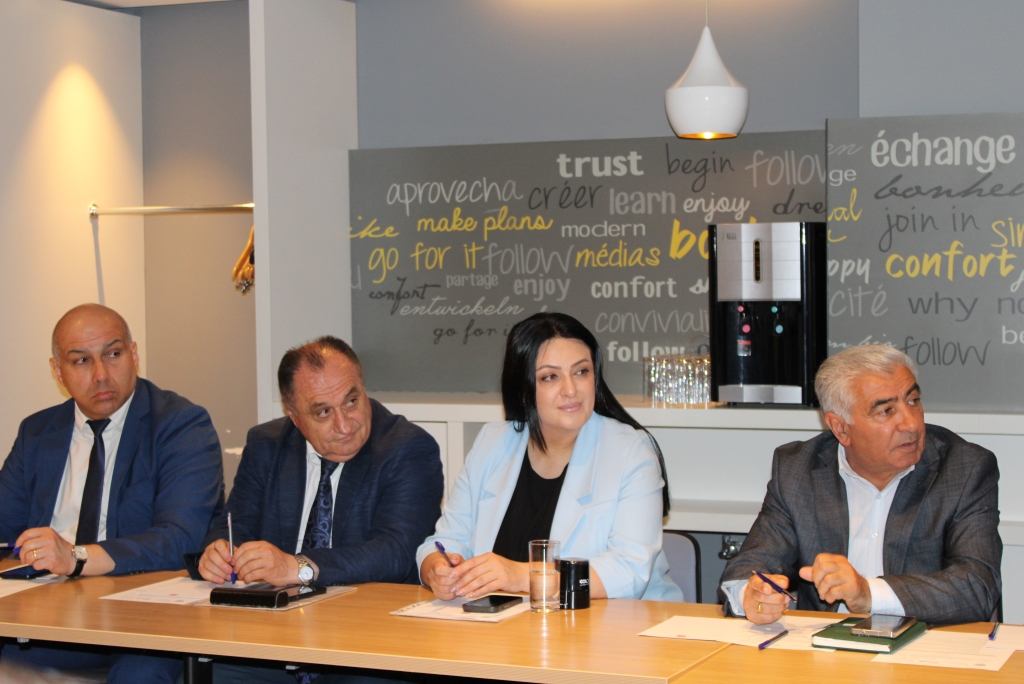
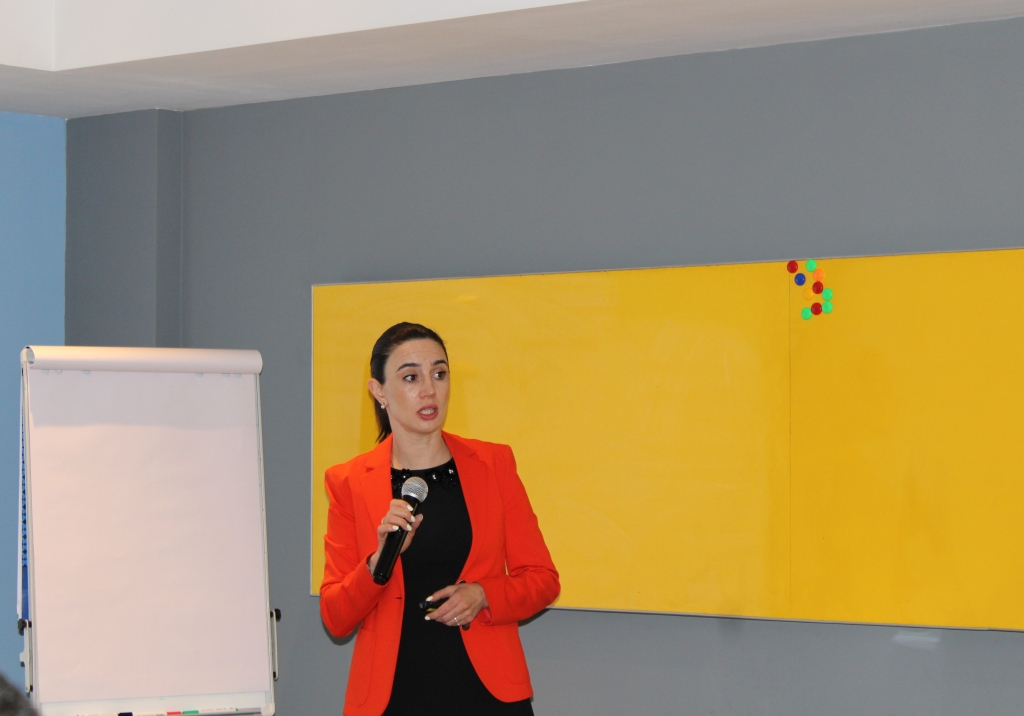

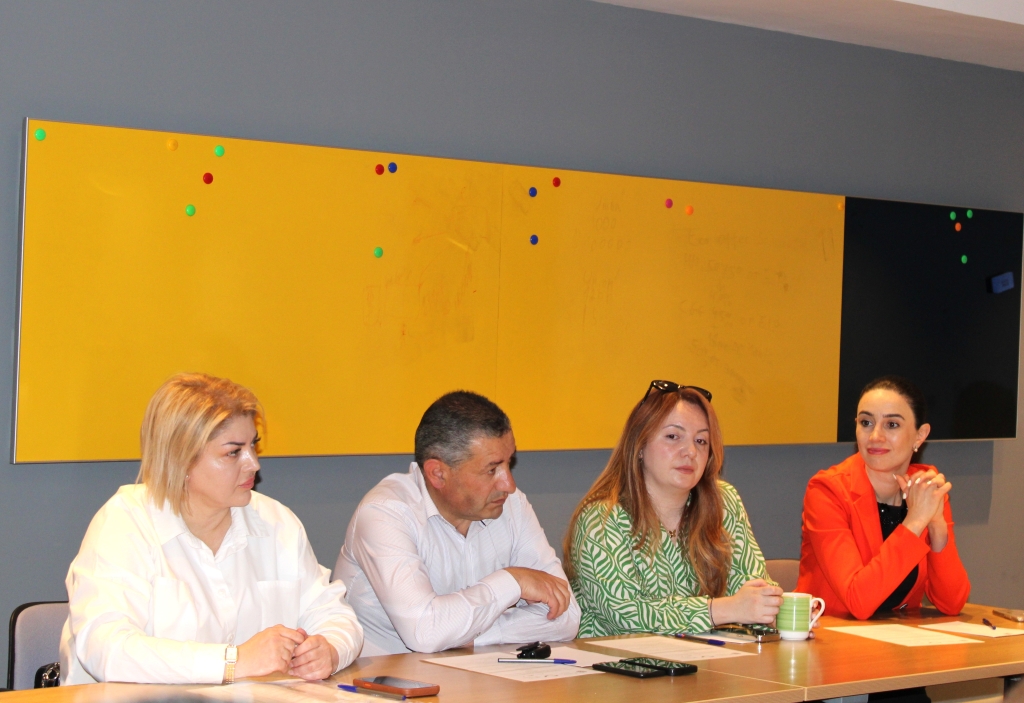
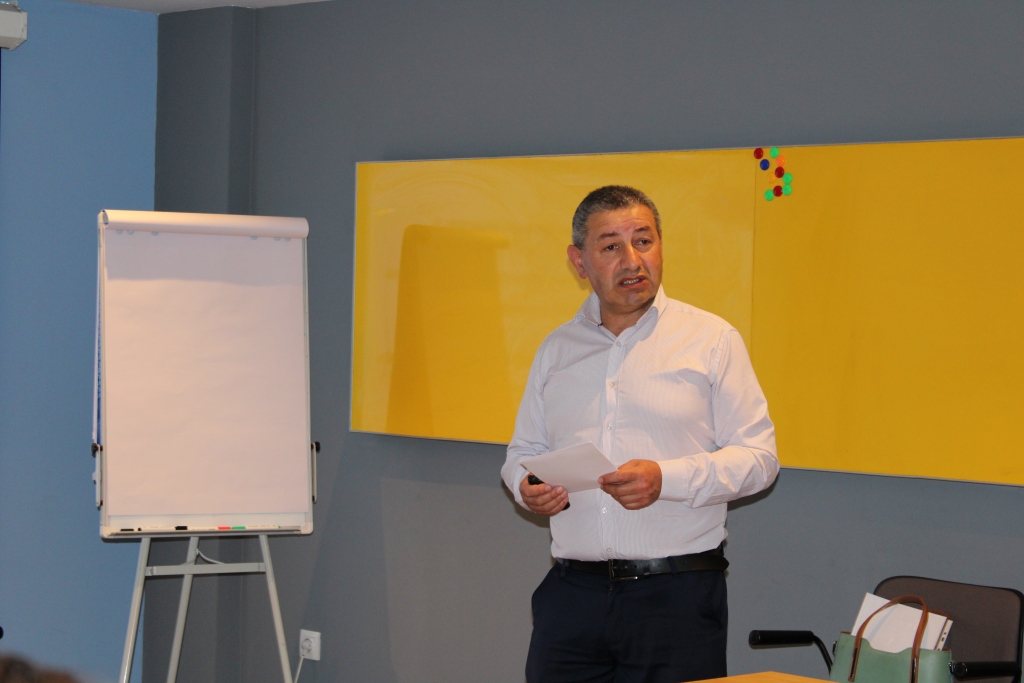
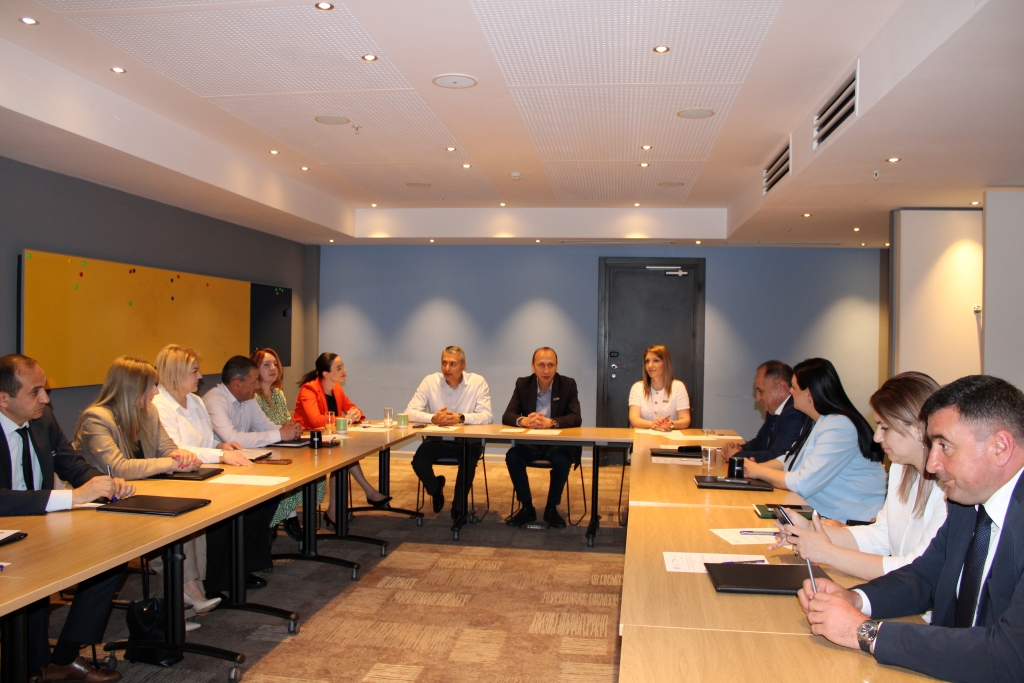
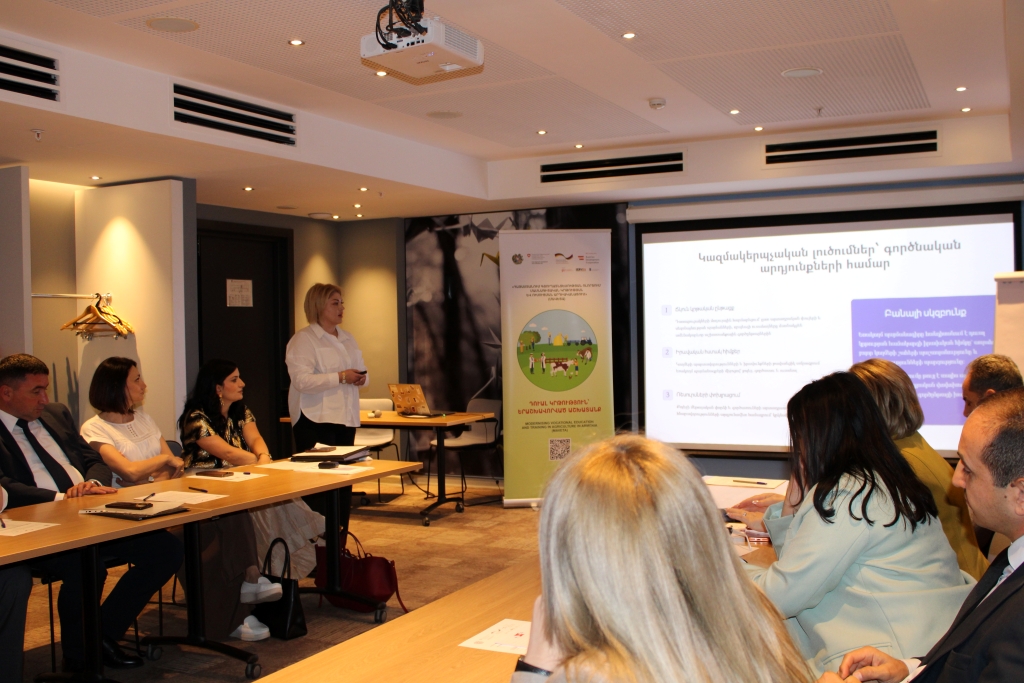
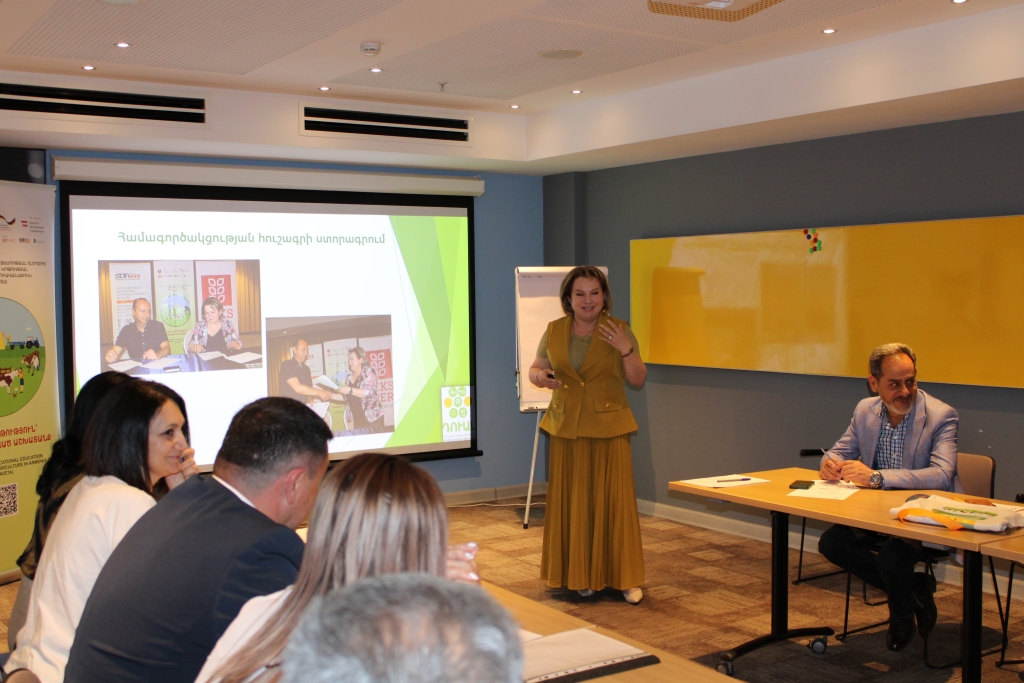
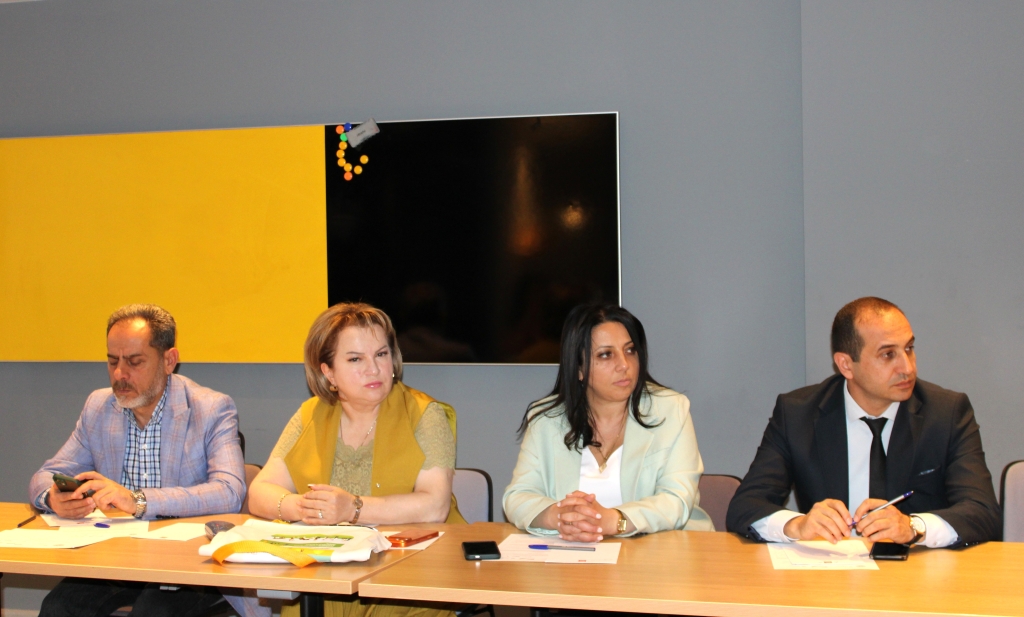
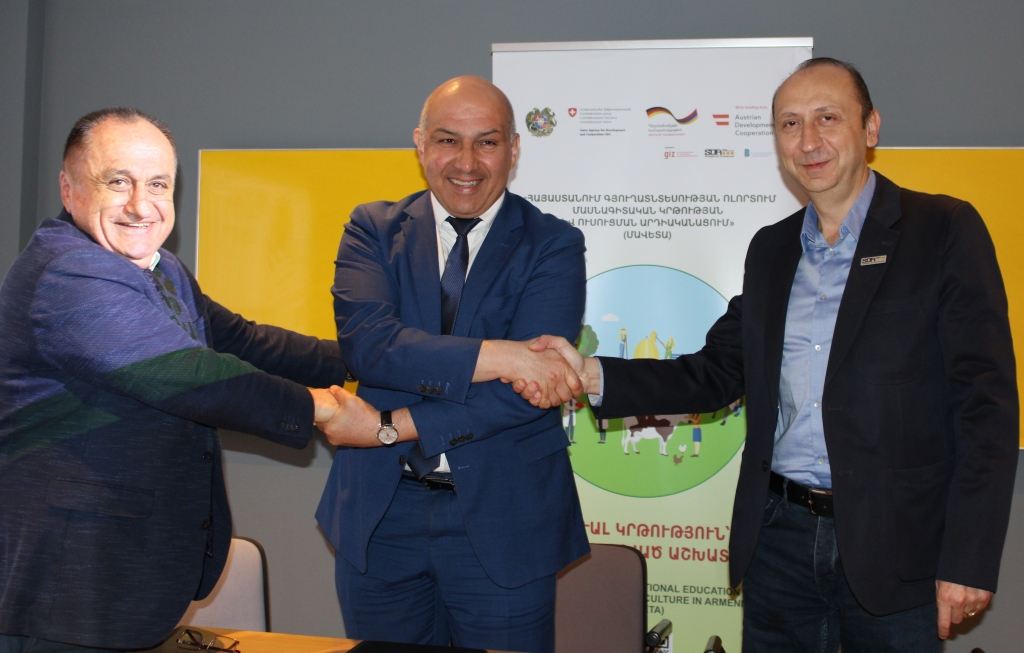
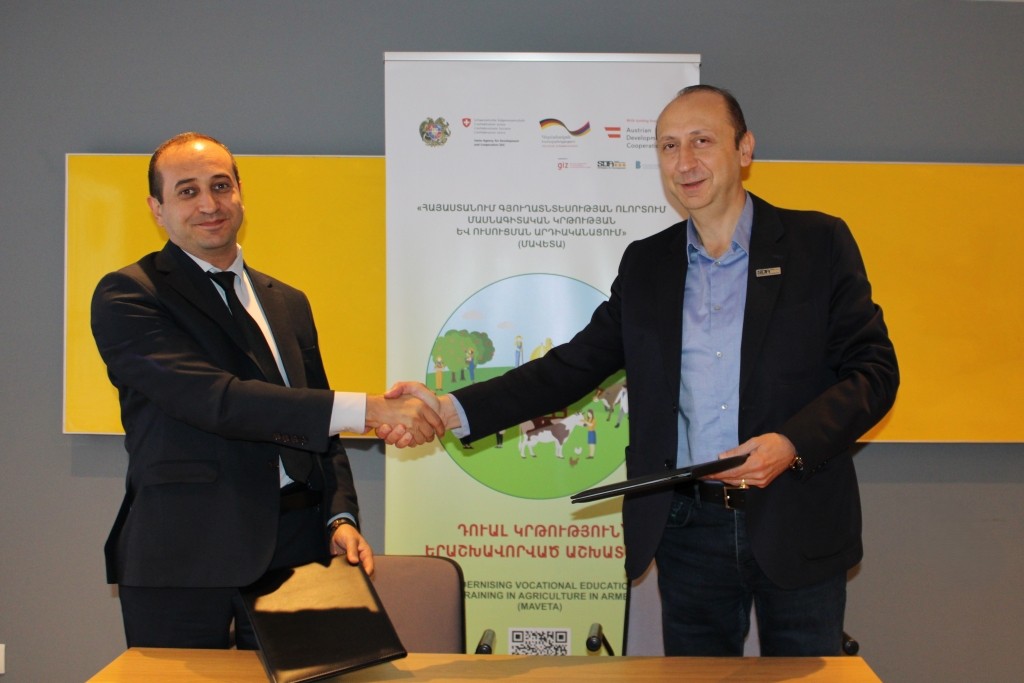
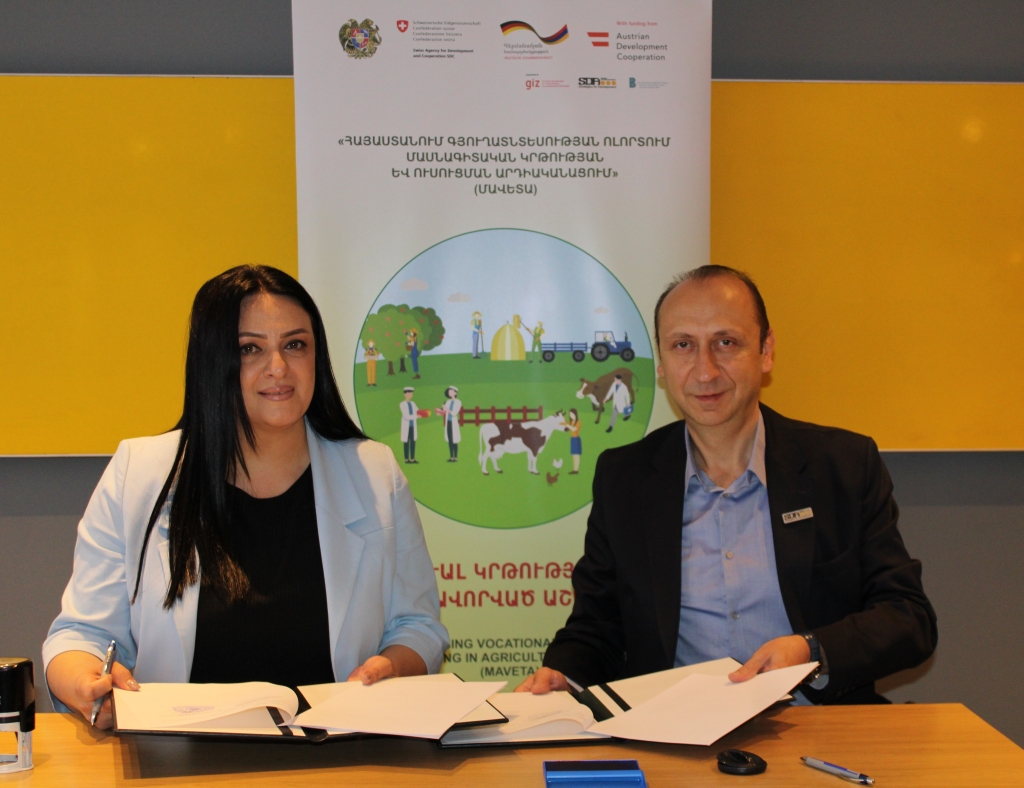
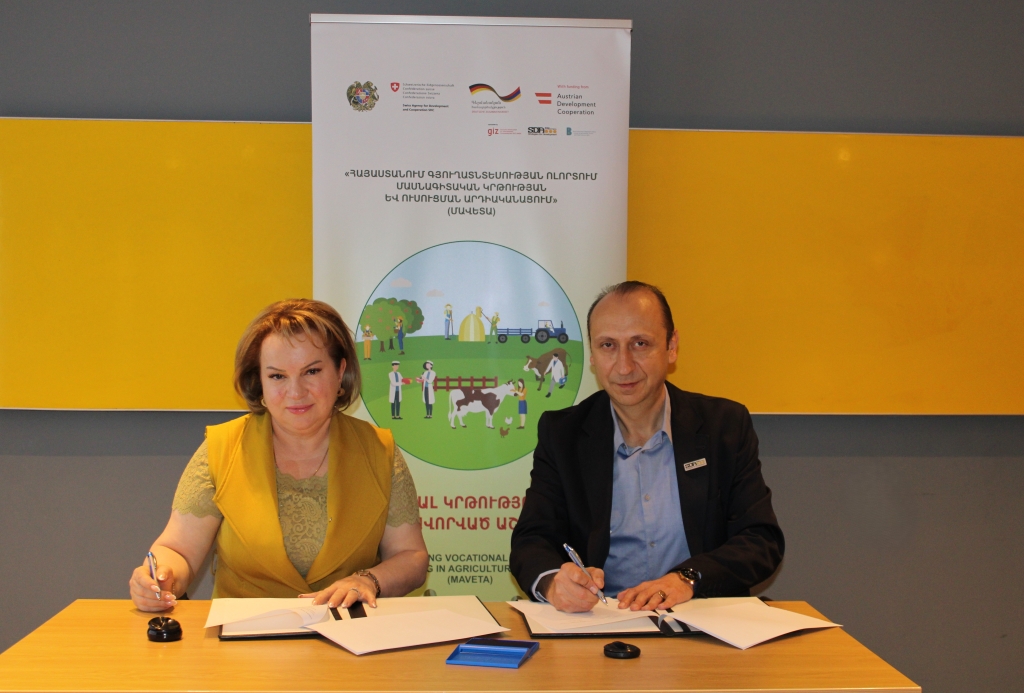
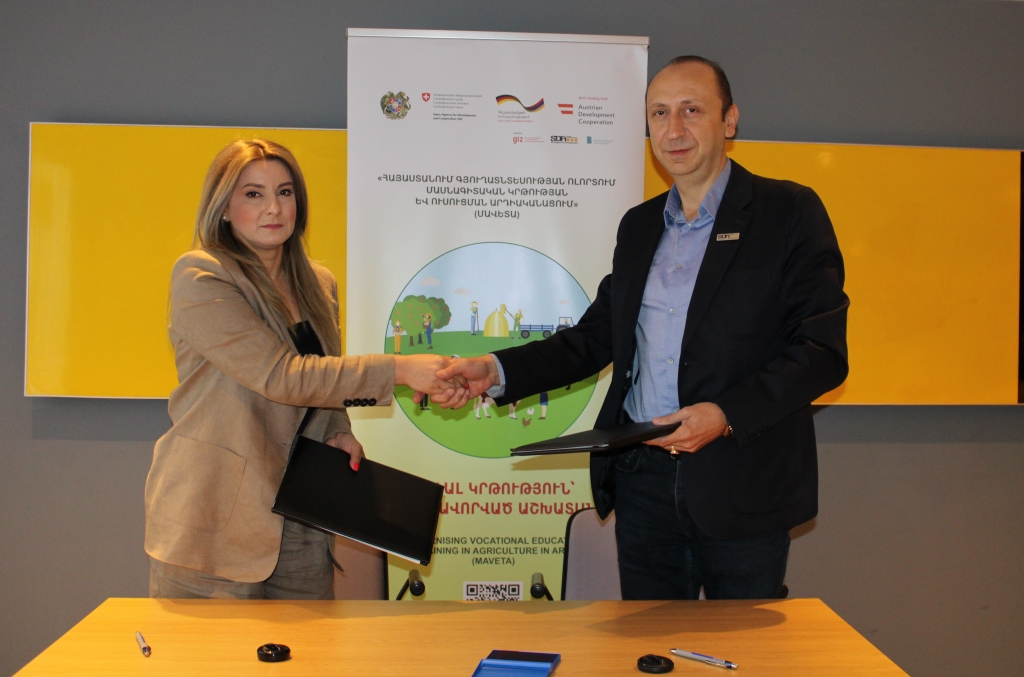
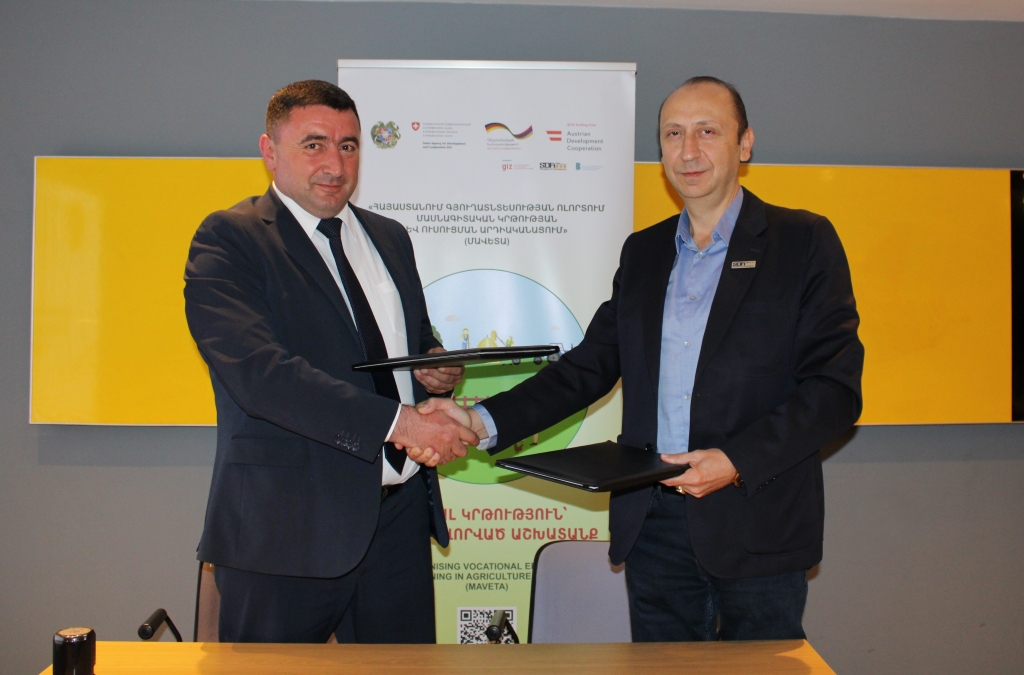
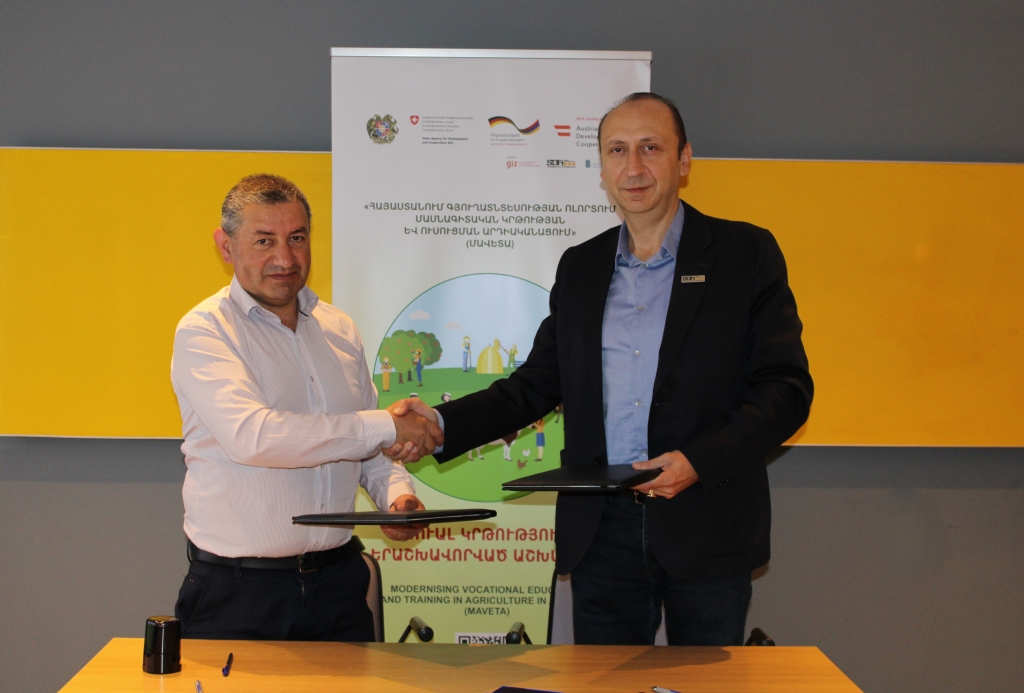
On 4 June 2026, the Modernizing Vocational Education and Training in Agriculture in Armenia (MAVETA) project convened a meeting with partner colleges, culminating in the formal signing of new Memoranda of Understanding (MoUs). The event marked an important milestone in the continued expansion of the project and reaffirmed the shared commitment of educational institutions and stakeholders to advancing agricultural vocational education and training (VET) in Armenia.
The MAVETA project seeks to support the modernization of agricultural VET by strengthening the alignment between education and labor market needs, enhancing the development of industry-relevant skills, and fostering meaningful engagement of the private sector in educational processes.
During the first phase of implementation, MAVETA established partnerships with six colleges. Through close collaboration with these institutions and private sector actors, the project successfully introduced and piloted elements of dual education, creating practical mechanisms for cooperation between educational institutions and employers. This experience provided valuable insights into the benefits and applicability of dual learning approaches while also identifying challenges and opportunities for further improvement.
The achievements and lessons learned during the initial phase created a solid foundation for the project’s expansion. Building on these results, MAVETA has extended its network by welcoming six additional partner colleges, significantly increasing the project’s reach and impact.
The expansion of the partner network represents an important step toward ensuring the sustainability and scalability of ongoing reforms in agricultural vocational education. It also reflects the growing recognition of the project’s relevance and its potential to contribute to a more responsive, inclusive, and labor market-oriented VET system.
During the meeting, participants were presented with the key activities and achievements implemented under the MAVETA project, including experiences gained through the introduction of dual education approaches. Discussions focused on opportunities for further strengthening cooperation between educational institutions and employers, enhancing practical learning opportunities, and improving the quality and relevance of vocational education.
Representatives of partner colleges shared their experiences and highlighted the positive outcomes achieved through collaboration, particularly in relation to the organization of practical training, engagement with employers, and the overall effectiveness of the learning process.
A central component of the event was the signing of Memoranda of Understanding, which formalized the commitment of the participating institutions to continue working together towards common objectives. The signed MoUs provide a framework for enhanced cooperation among educational institutions, private sector partners, and sectoral stakeholders, supporting the creation of new work-based learning opportunities for students and contributing to the preparation of qualified professionals equipped with the skills demanded by the agricultural sector.
The partnerships fostered through the MAVETA project constitute a significant investment in the development of human capital for Armenia’s agricultural sector. By bringing together educational institutions, employers, and industry stakeholders, the project continues to promote a modern and demand-driven vocational education system that responds to labor market requirements and creates meaningful opportunities for young people.
The expansion of the MAVETA network once again demonstrates that strong partnerships, effective work-based learning mechanisms, and closer cooperation between education and employment are fundamental drivers of sustainable development and competitiveness within the agricultural sector.
The MAVETA project is financed by a broad coalition of international and local organisations led by the Swiss Agency for Development and Cooperation (SDC), including the German Ministry for Economic Cooperation and Development (BMZ), the Austrian Development Agency and the Government of Armenia.
The project’s implementing partners are the GIZ and SDA and the School of Agricultural, Forest and Food Sciences at the Bern University of Applied Sciences (HAFL).