




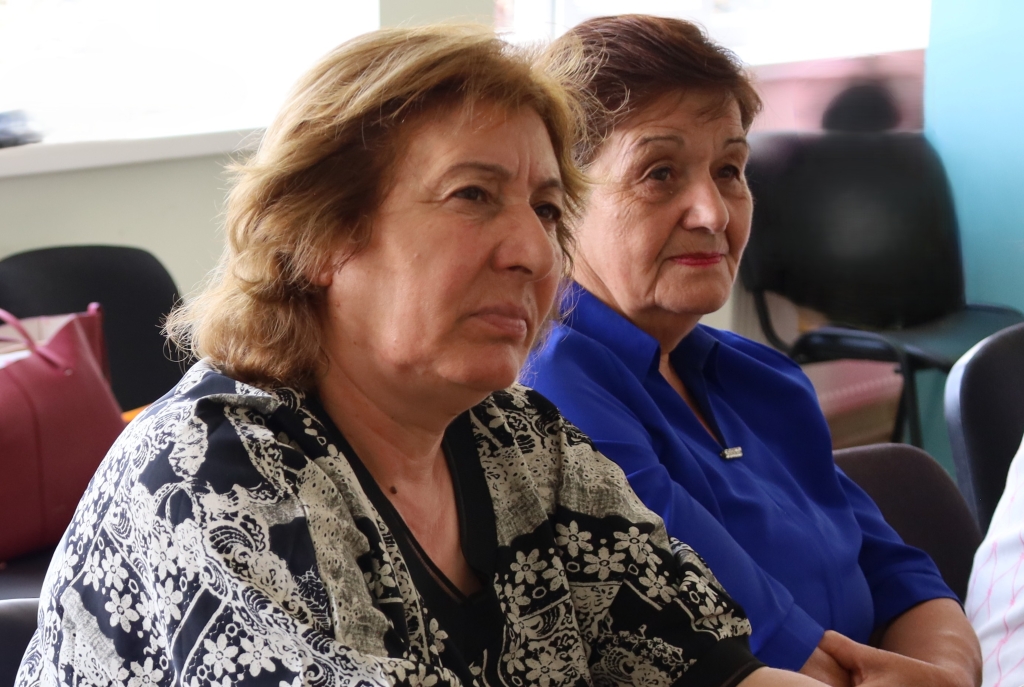
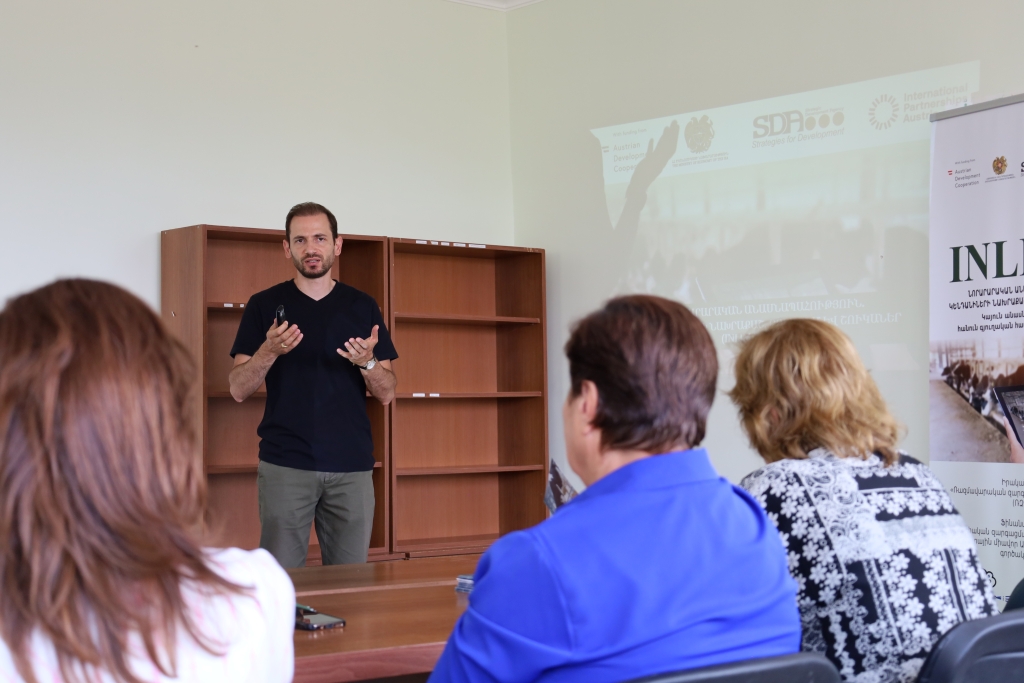
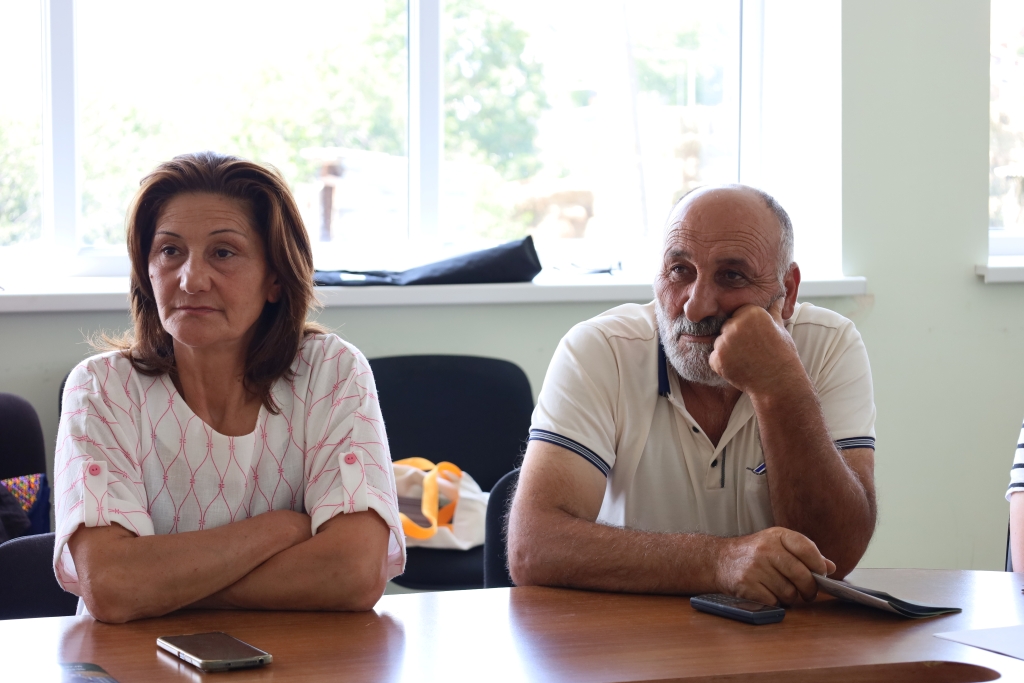
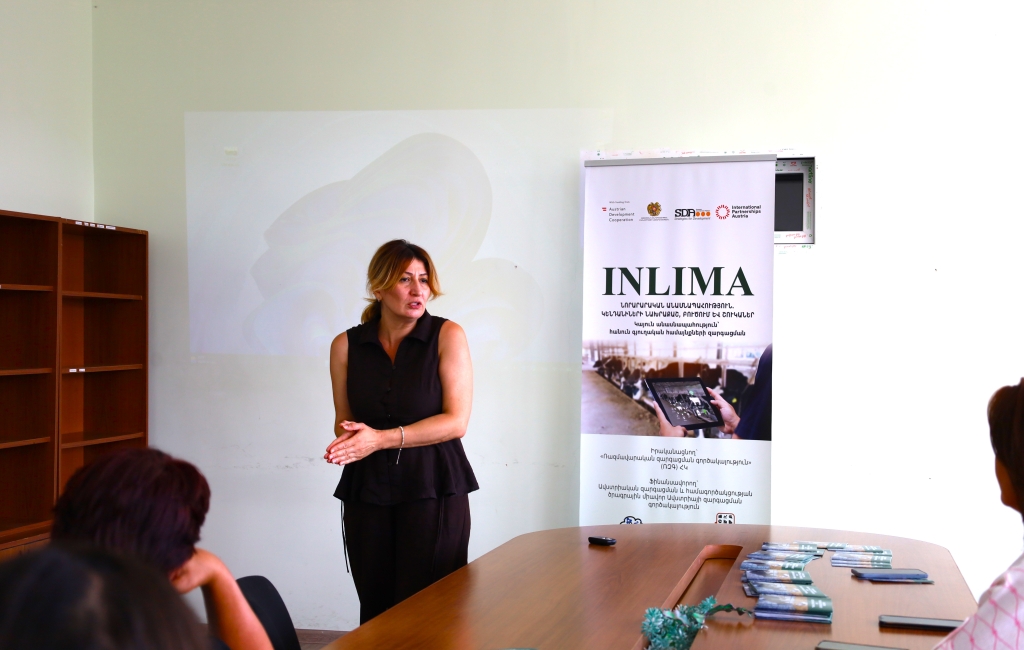
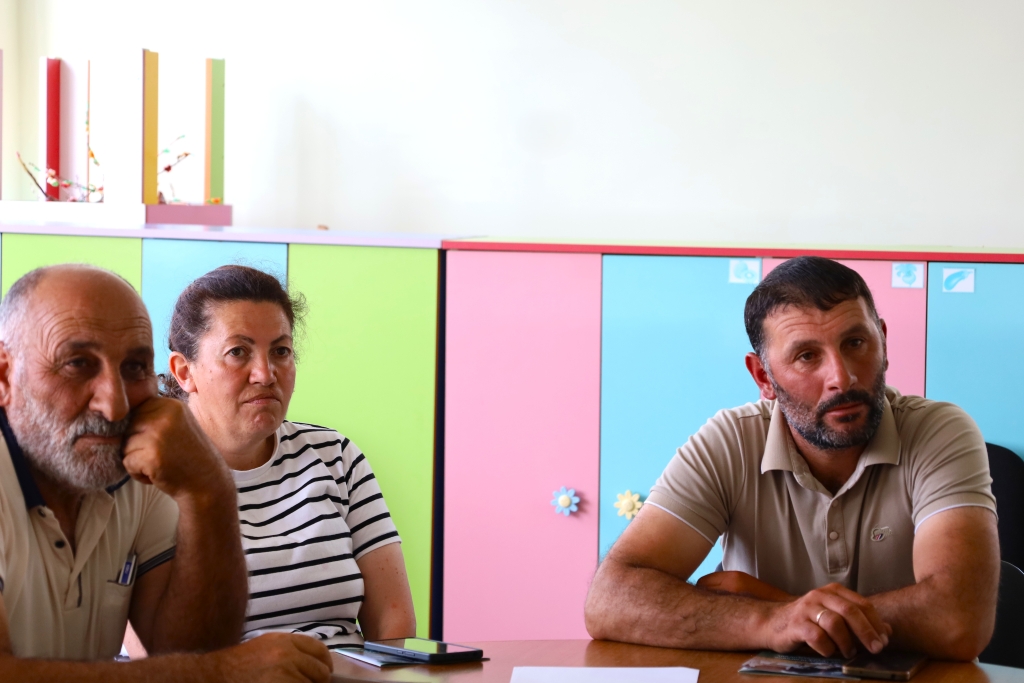
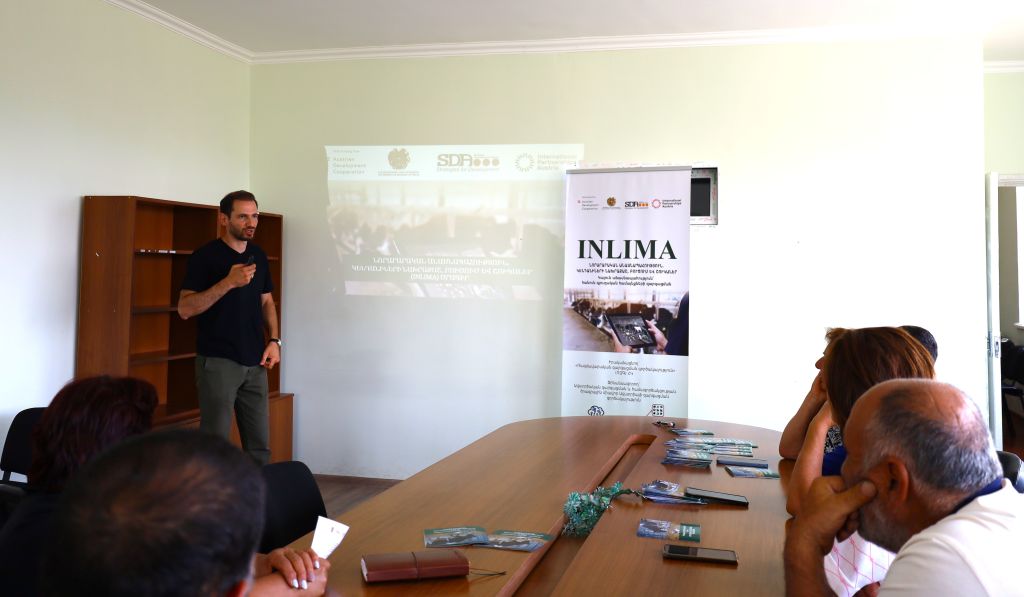
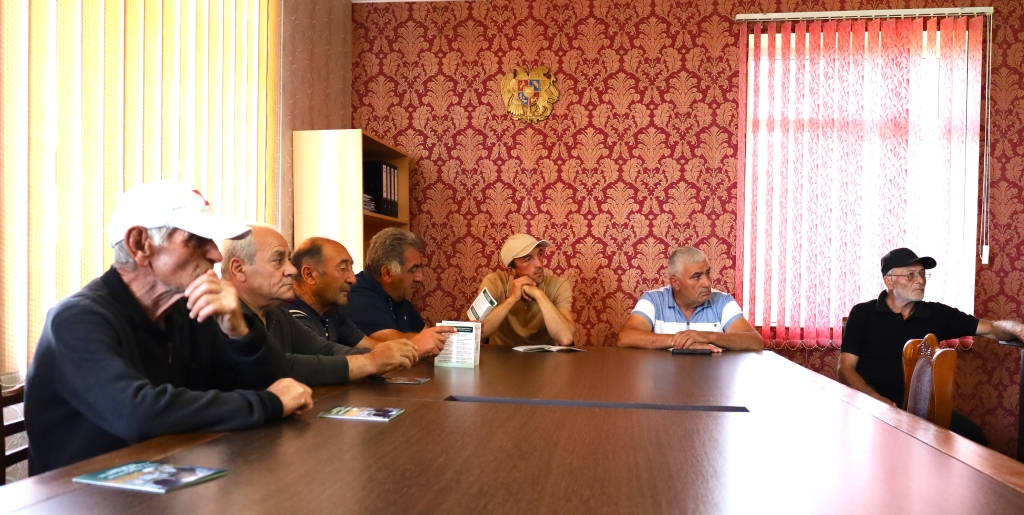
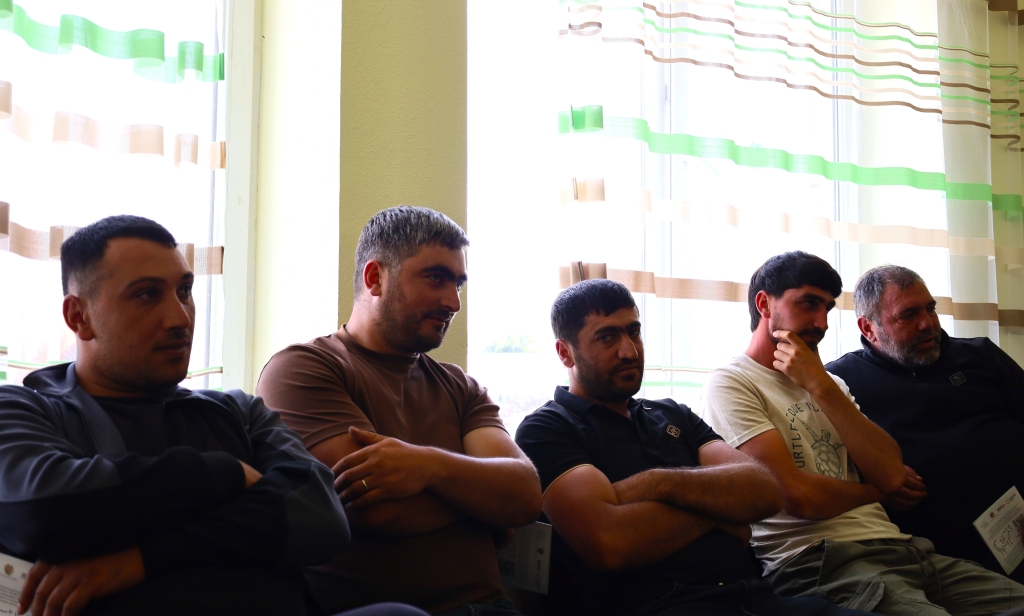
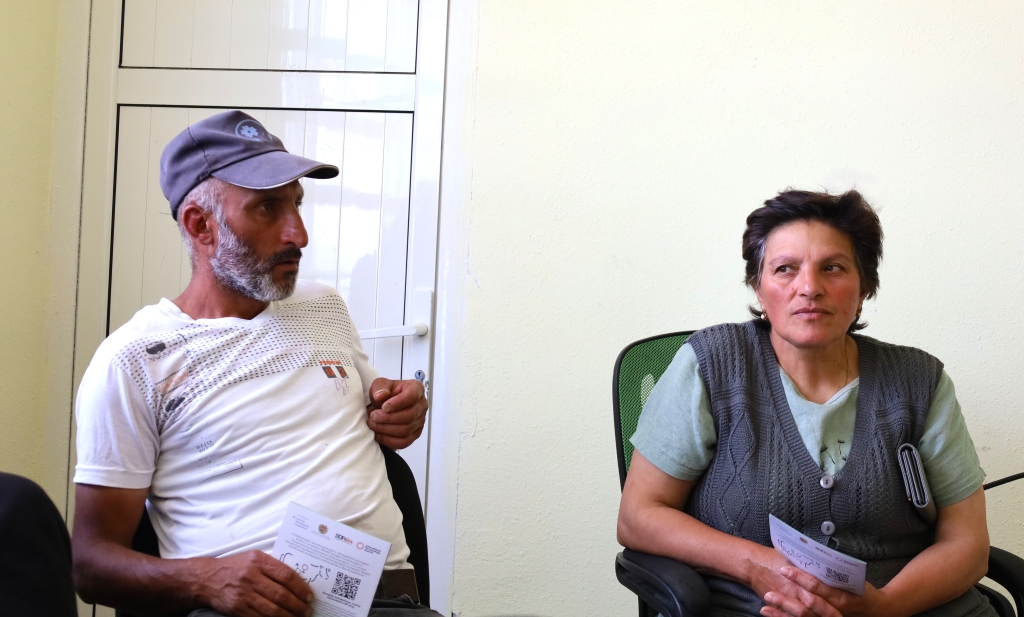
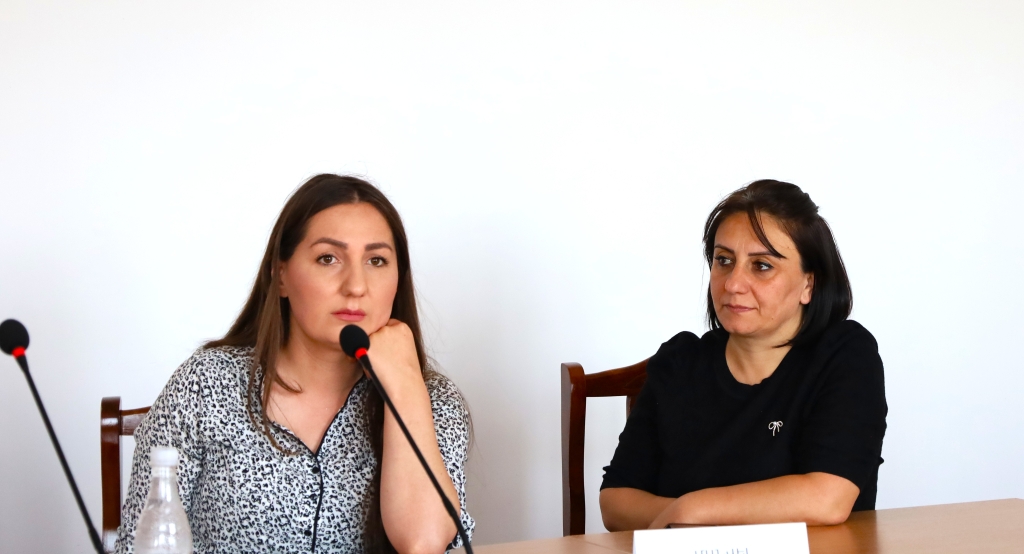
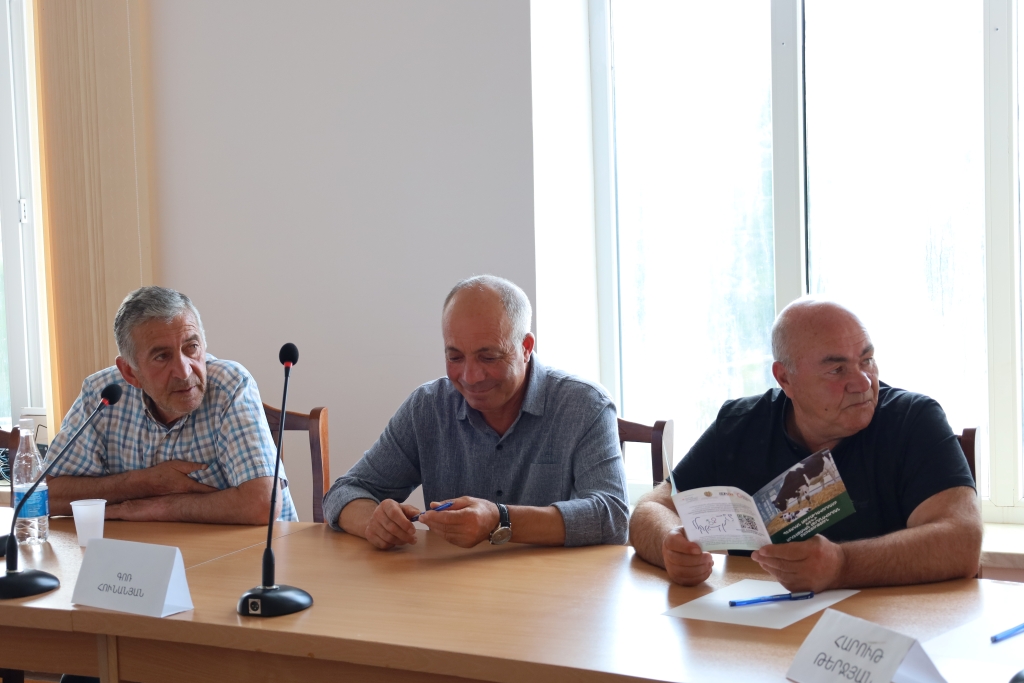
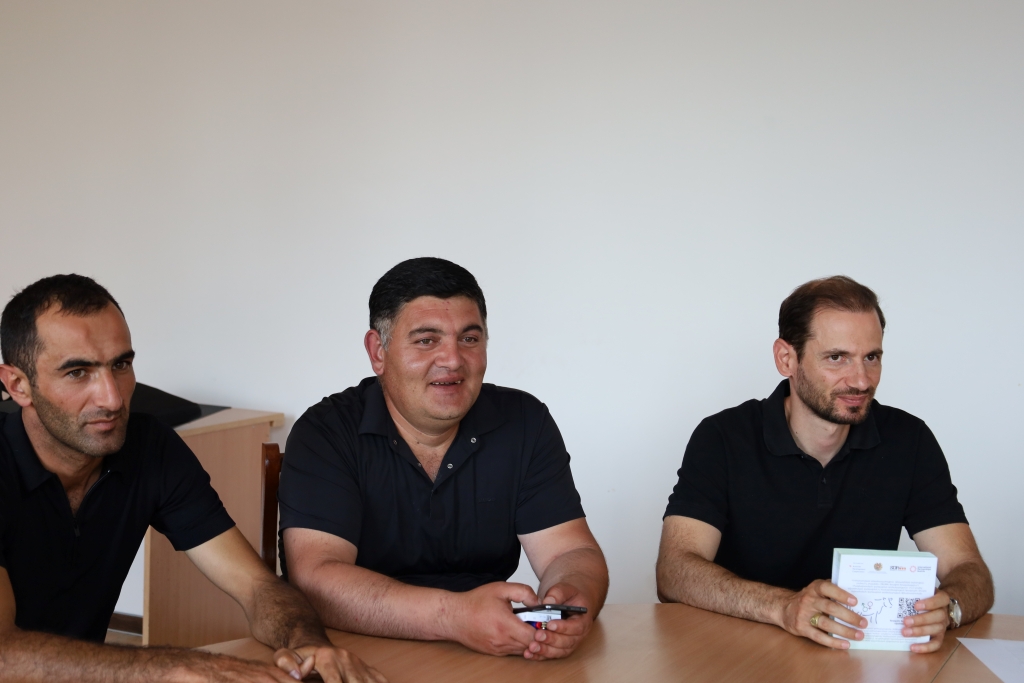
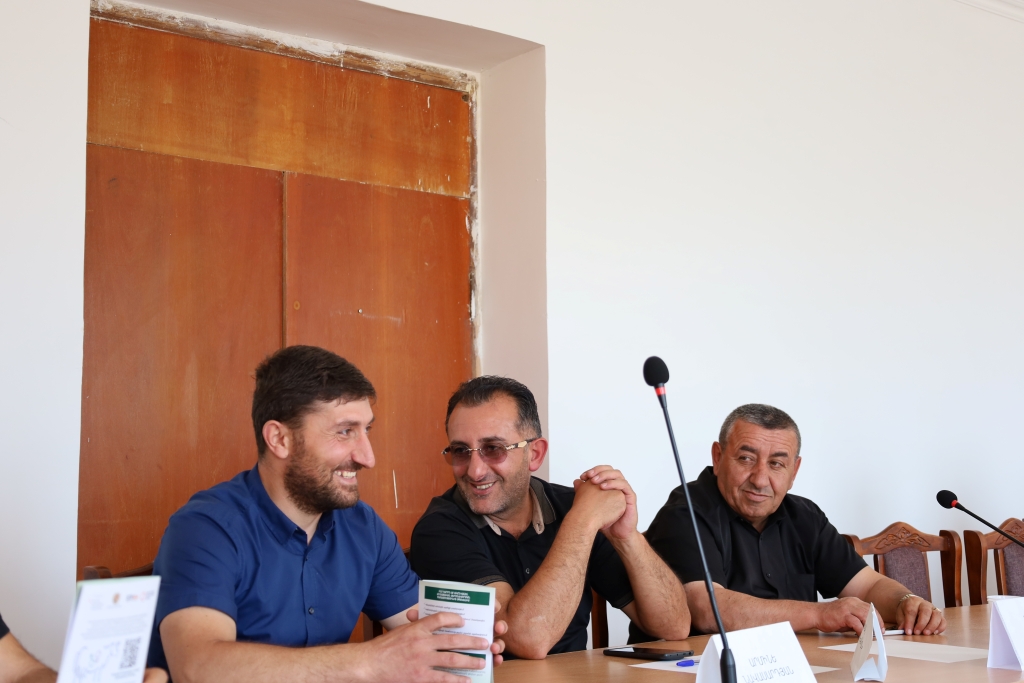
How can artificial insemination contribute to higher productivity, improved herd quality and greater farm profitability? This was the central message of awareness-raising visits conducted under the INLIMA project in Sevan and Tsaghkahovit communities.
During the meetings, livestock farmers were introduced to the state-supported cattle productivity experimental program, demonstrating how access to improved reproductive technologies can contribute to systematic herd improvement. state-subsidised artificial insemination service for cattle as a practical tool for strengthening herd productivity and improving the economic performance of their farms.
Artificial insemination is far more than a reproductive technology. It provides farmers with an opportunity to improve the genetic potential of their herds, access animals with enhanced production characteristics, reduce the risk of infertility, optimise calving and lactation planning, and prevent inbreeding. It can also contribute to reducing the transmission of certain infectious diseases and supporting more efficient management of farm-level production costs.
Farmers were also introduced to the high-quality breeds available through the programme, including Holstein, Brown Swiss, Jersey and Fleckvieh, enabling breeding decisions to be better aligned with the specific production objectives and conditions of each farm.
The state support mechanism further improves accessibility: AMD 10,000 of the artificial insemination cost per animal is subsidised by the state, while the livestock farmer contributes AMD 5,000. The programme is available to eligible livestock keepers residing in settlements within the target regions who own up to 20 numbered cattle registered in their name and enter into an agreement with an artificial insemination technician participating in the state support programme.
Yet effective breeding begins well before insemination. Animal health, adequate nutrition and water supply, vaccination, parasite control, appropriate housing conditions and hygiene are all critical determinants of an animal’s reproductive performance and productive potential.
Through this awareness-raising campaign, INLIMA is positioning state-supported artificial insemination not simply as an accessible service, but as a knowledge-based livestock management and breeding tool – enabling farmers to make more informed breeding decisions, strengthen the genetic and productive potential of their herds, and ultimately improve the economic sustainability of their farms.
“Innovative Livestock Management: Animal Migration, Breeding & Markets” (INLIMA) project is implemented by Strategic Development Agency NGO and funded by the Austrian Development Agency (ADA), the operational unit of Austrian Development Cooperation.