







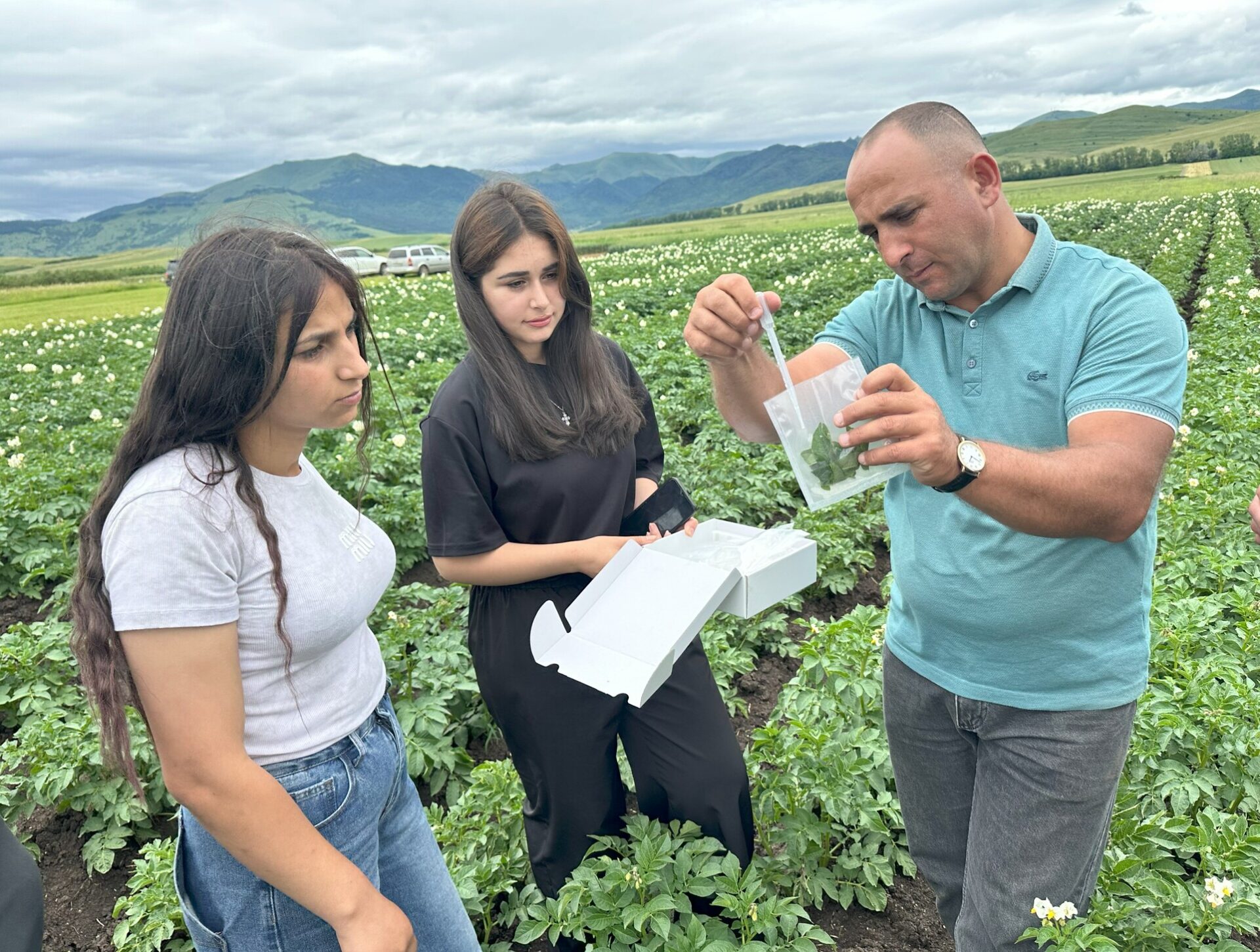
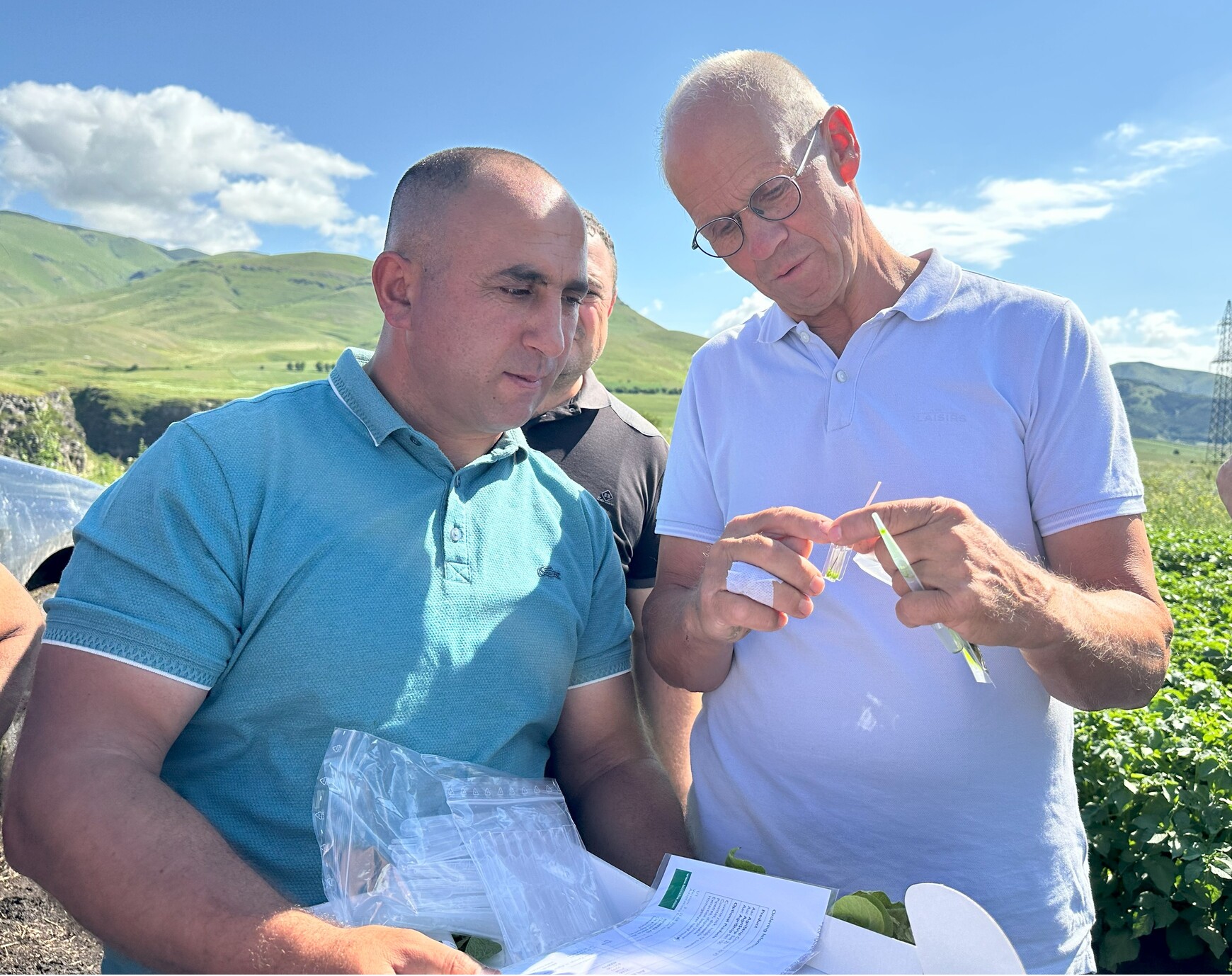
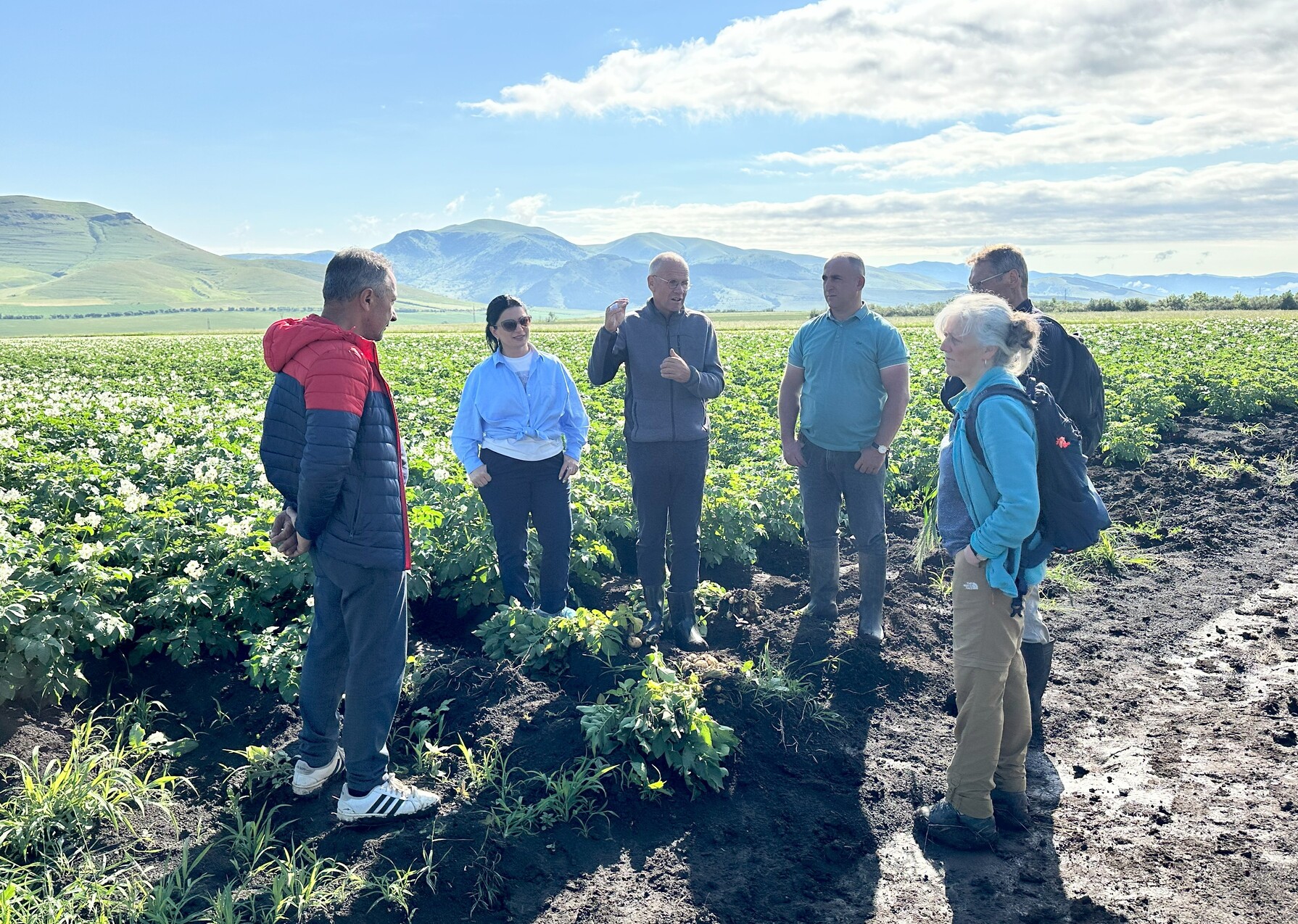

Within the framework of the Modernizing Vocational Education and Training in Agriculture in Armenia (MAVETA) project, a practical field training session was held in the Lori region from June 30 to July 4. The training was designed for local farmers specialized in field agriculture, faculty and apprentices from the Stepanavan State Agricultural and Tavush Patrick Devedjian Regional Colleges.
Led by Swiss agronomist Ruedi Schwärzel and agricultural expert Johannes Brunner from Bern University of Applied Sciences (HAFL), the participants explored the best practices in potato cultivation, techniques for diagnosing and preventing viral diseases, and strategies to produce high-quality seed potatoes.
The training also included visits to the Agricultural Research and Certification Center and the Gyumri Breeding Station. During these visits, discussions were held on opportunities for growers to trial new potato varieties, achieve seed certification, and engage in collaborative ventures.
The MAVETA project is funded by a broad coalition of international and local organizations led by the Swiss Agency for Development and Cooperation (SDC), including the Austrian Development Agency, the German Ministry for Economic Cooperation and Development (BMZ), the Government of Armenia, the Swiss Church Aid (HEKS/EPER) NGO, Izmirlian Foundation, the Strategic Development Agency (SDA) NGO and Vanand Agro CJSC.
The project’s implementing partners are the GIZ and HEKS/EPER with the involvement of SDA and the School of Agricultural, Forest and Food Sciences at the Bern University of Applied Sciences (HAFL).