





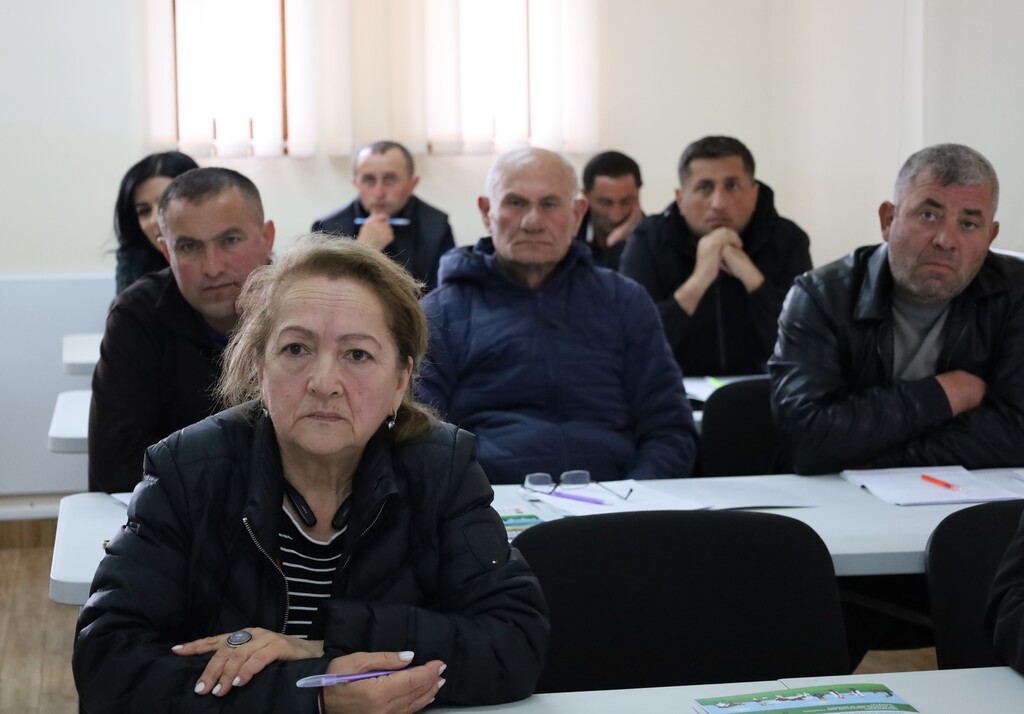


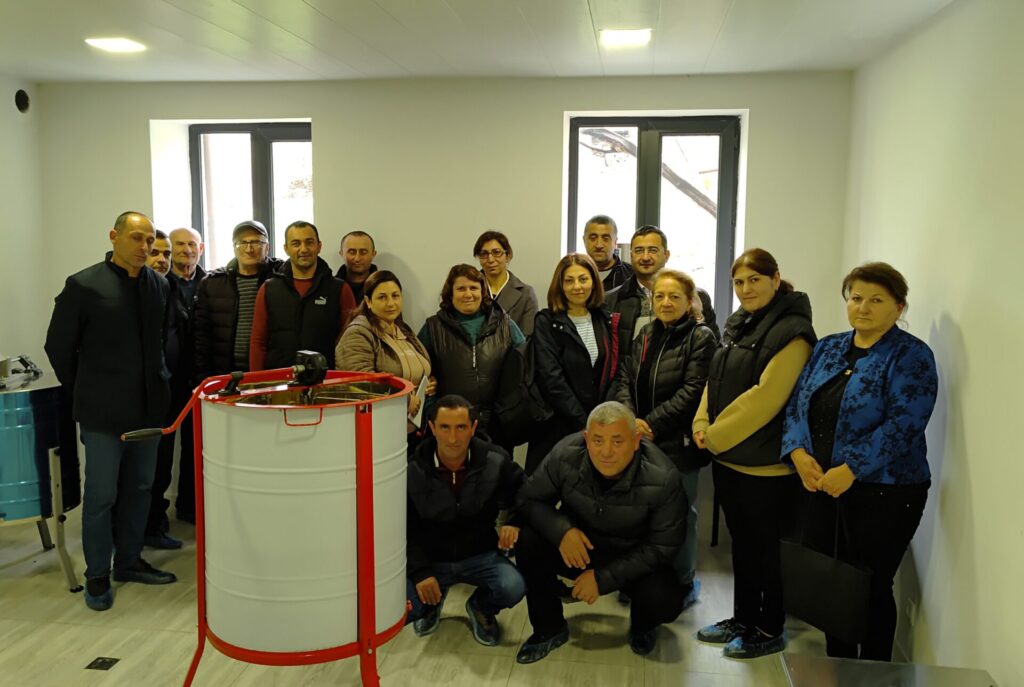


Within the framework of “Socio-Economic Integration of Refugees in Armenia” (SEIRA) project and the “Modernizing Vocational Education and Training in Agriculture in Armenia” (MAVETA) project, beekeeping training courses were held in Syunik and Gegharkunik regions in April for displaced persons from Nagorno-Karabakh and local vulnerable groups.
The training was conducted by Tigran Sedrakyan, a representative of the “Beekeeping Forge Scientific and Educational Center”.
The courses on the topics of “Beekeeping, honey apiary organization” and “Basics of beekeeping, honey product production, marketing” provided participants with the opportunity to learn the basics of the profession through practical and theoretical methodology.
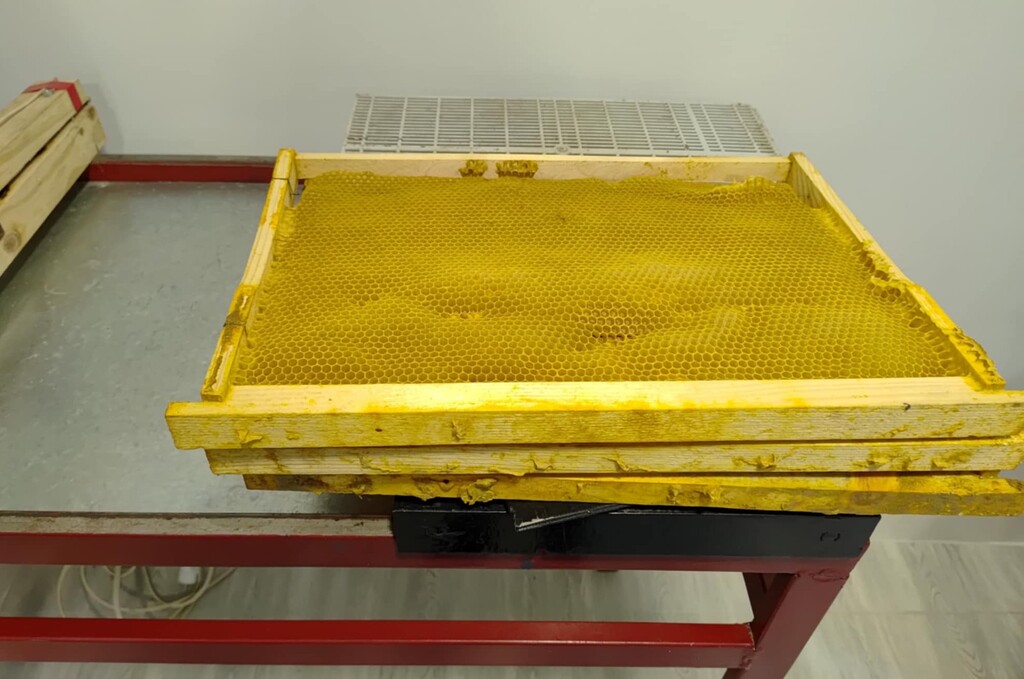
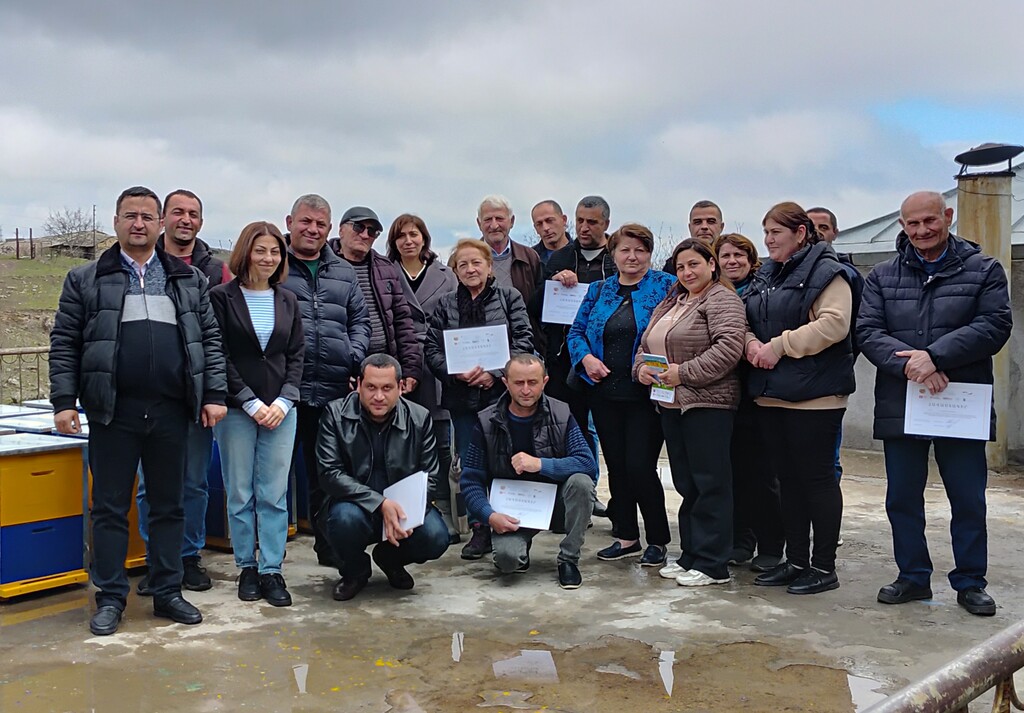
During the practical part of the course, visiting a honey production facility in the Shinuhayr settlement of the Goris community, the trainer presented the steps that contribute to increasing the productivity of honey products through the effective use of existing equipment and techniques.
About 40 people participated in the training in both regions.
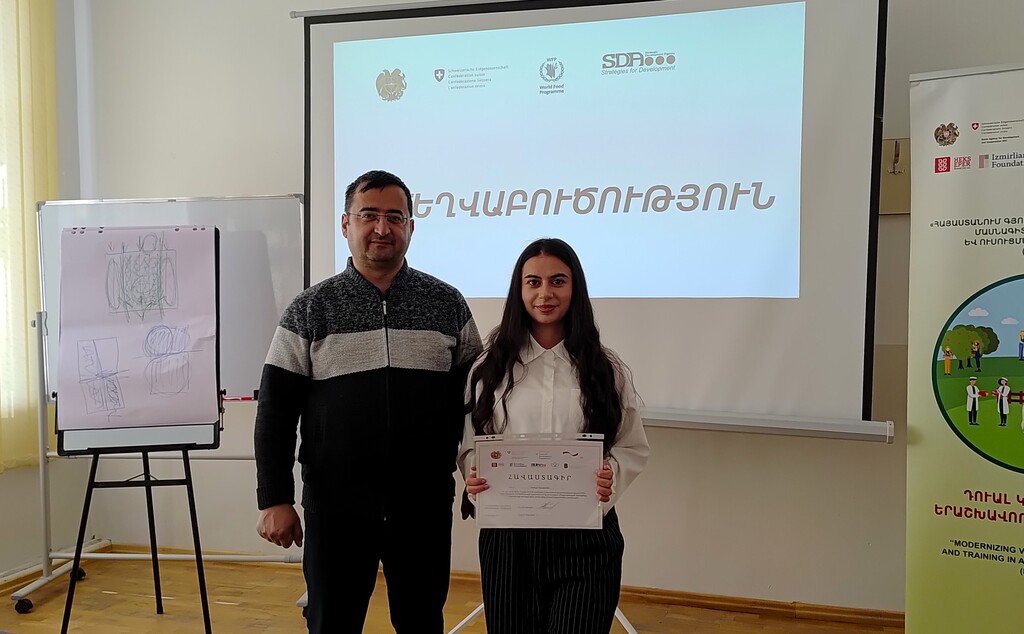
At the end of the training, participants were awarded certificates.
The “Socio-Economic Integration of Refugees in Armenia” (SEIRA) project fosters socio-economic integration by improving food security, creating sustainable livelihoods, and empowering both refugees and host communities in Armenia, promoting resilience and economic growth through agricultural and business development.
The SEIRA project is funded by the Swiss Agency for Development and Cooperation and implemented by the “Strategic Development Agency” NGO and the UN World Food Programme
The MAVETA project is funded by a broad coalition of international and local organizations led by the Swiss Agency for Development and Cooperation (SDC), including the Austrian Development Agency, the German Ministry for Economic Cooperation and Development (BMZ), the Government of Armenia, the Swiss Church Aid (HEKS/EPER) NGO, Izmirlian Foundation, the Strategic Development Agency (SDA) NGO and Vanand Agro CJSC.
The project’s implementing partners are the GIZ and HEKS/EPER with the involvement of SDA and the School of Agricultural, Forest and Food Sciences at the Bern University of Applied Sciences (HAFL).